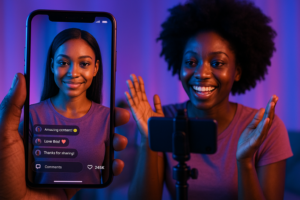

Artificial intelligence has fundamentally changed how content is created, distributed, and consumed. From AI writing assistants to automated video editing and personalized content feeds, the rules creators once followed are being rewritten. In this new era, success isn’t about producing more content — it’s about creating better, more human, and more valuable content, even with AI in the mix.
Understanding these new rules is essential for creators, brands, and marketers who want to stay relevant.
1. AI Is a Tool, Not the Creator
AI can generate text, images, audio, and video in seconds — but it lacks lived experience, judgment, and emotional depth.
The new rule:
- Use AI to assist, not replace, human creativity
- Let humans define ideas, tone, and perspective
- Use AI for drafts, research support, and optimization
Audiences still crave originality and human insight — things AI alone cannot provide.
2. Authenticity Matters More Than Ever
As AI-generated content floods the internet, authenticity becomes a differentiator.
Creators must:
- Share real experiences and opinions
- Avoid generic, templated content
- Develop a recognizable voice and perspective
- Be transparent about AI use when appropriate
In an AI-driven world, being real is a competitive advantage.
3. Quality Beats Quantity
AI makes it easy to publish at scale — but volume alone no longer impresses.
The new focus is on:
- Depth over frequency
- Clear value in every piece of content
- Thoughtful insights rather than surface-level summaries
- Well-researched and well-structured information
Search engines and audiences reward content that genuinely helps.
4. Original Thinking Is the New SEO
AI can remix existing ideas, but it struggles to create truly original thought.
Content that performs well now:
- Introduces new perspectives
- Shares first-hand knowledge or case studies
- Combines ideas across disciplines
- Challenges conventional thinking
Originality improves credibility, authority, and discoverability.

5. Human-Centered Storytelling Wins
Stories connect where automation cannot.
Effective AI-era storytelling includes:
- Personal narratives
- Behind-the-scenes experiences
- Customer stories and testimonials
- Honest successes and failures
Emotion, vulnerability, and context make content memorable.
6. Multi-Format Content Is Essential
AI has accelerated content repurposing across formats.
Creators should think beyond text:
- Short-form video and audio
- Visual explainers and carousels
- Interactive content and live sessions
- Blogs adapted into social posts and newsletters
Meeting audiences where they are is now a core rule.
7. Transparency Builds Trust
Audiences are becoming more aware of AI-generated content.
Best practices include:
- Being honest about AI involvement
- Avoiding deceptive or misleading automation
- Maintaining ethical standards in content creation
Trust is fragile — and once lost, hard to regain.

8. Continuous Learning Is Non-Negotiable
AI tools evolve rapidly.
Modern creators must:
- Stay updated on new platforms and tools
- Experiment and adapt regularly
- Understand how algorithms and AI systems work
- Balance automation with human judgment
The learning curve is part of the new creative process.
Conclusion
The AI-driven world isn’t the end of human creativity — it’s a test of it. The new rules of content creation reward authenticity, originality, and intentional use of technology. Creators who embrace AI as a support tool while leading with human insight will stand out in an increasingly automated digital landscape.
References (External Links)
- Harvard Business Review – How AI Is Changing Creative Work
https://hbr.org - MIT Technology Review – Generative AI and Content Creation
https://www.technologyreview.com - Google Search Central – Helpful Content and AI
https://developers.google.com/search - Forbes – Content Creation in the Age of AI
https://www.forbes.com - OpenAI – Responsible Use of AI in Creative Work
https://www.openai.com