
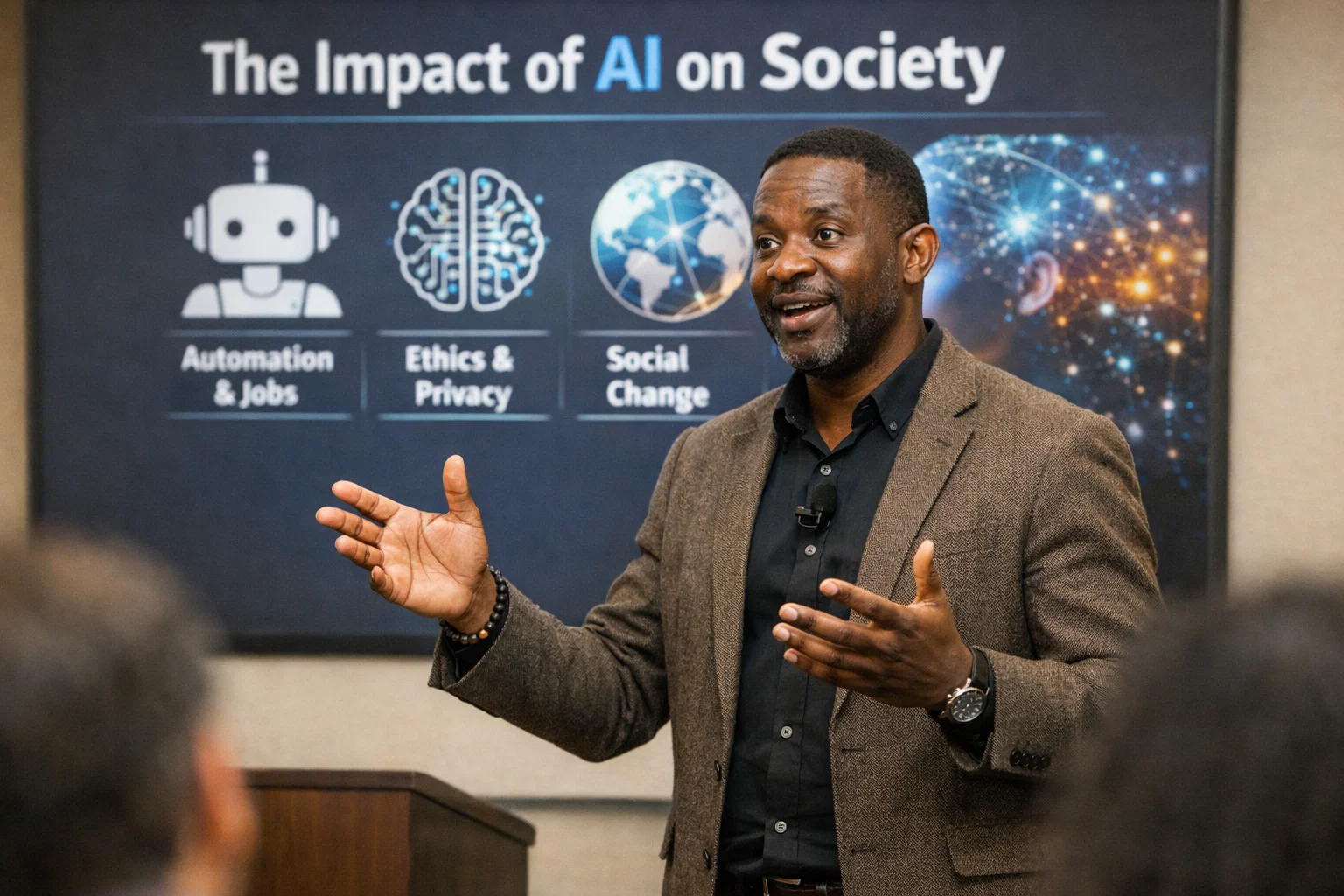
The Effect of Artificial Intelligence in Our Society
Artificial Intelligence (AI) is no longer a futuristic concept—it is a powerful force shaping modern society. From how we communicate to how businesses operate, AI continues to transform everyday life in ways that are both beneficial and challenging. Understanding its effects helps us prepare for a future where humans and intelligent machines coexist.
What is Artificial Intelligence?
Artificial Intelligence refers to machines or software designed to mimic human intelligence. These systems can learn from data, recognize patterns, make decisions, and even improve over time without human intervention.
Positive Effects of AI in Society
1. Improved Efficiency and Productivity
AI helps automate repetitive tasks, allowing businesses to operate faster and more efficiently. This reduces human workload and increases output.
Example:
Companies like Amazon use AI-powered robots in warehouses to sort and package goods quickly.
2. Advancements in Healthcare
AI is revolutionizing healthcare by assisting doctors in diagnosing diseases and recommending treatments.
Example:
IBM developed AI systems such as Watson that analyze medical data to support clinical decisions and detect diseases like cancer early.
3. Personalized Learning in Education
AI tools help students learn at their own pace by adapting content to their needs.
Example:
Duolingo uses AI to customize lessons based on a learner’s strengths and weaknesses.
4. Enhanced Communication and Daily Living
AI-powered applications make communication easier and daily activities more convenient.
Example:
Google Maps uses AI to predict traffic and suggest the fastest routes, while WhatsApp uses AI to filter spam messages.
5. Business Growth and Customer Experience
AI enables businesses to understand customer behavior and provide personalized services.
Example:
Netflix uses AI algorithms to recommend movies and shows based on users’ viewing history.

Negative Effects of AI in Society
1. Job Displacement
Automation can replace human workers, especially in routine jobs, leading to unemployment in some sectors.
Example:
Manufacturing industries increasingly rely on robots instead of human labor.
2. Privacy and Security Concerns
AI systems collect large amounts of personal data, raising concerns about how this data is used and protected.
Example:
Facial recognition technology can track individuals without their consent.
3. Bias and Ethical Issues
AI systems can reflect biases present in their training data, leading to unfair outcomes.
Example:
Some AI recruitment tools have shown bias against certain groups due to flawed data.
4. Dependence on Technology
Over-reliance on AI may reduce human critical thinking and decision-making skills.
Conclusion
Artificial Intelligence has a profound impact on society, offering numerous benefits such as improved healthcare, efficiency, and convenience. However, it also presents challenges like job displacement, ethical concerns, and privacy risks. To maximize its benefits, society must adopt responsible AI practices and ensure proper regulations are in place.
References
- World Economic Forum
- McKinsey & Company
- OECD
- Stanford University
- IBM