.
Introduction
The future of digital Future of Digital Marketing is changing rapidly. New technologies, changing consumer behavior, artificial intelligence, and evolving search habits are forcing businesses to rethink how they attract and engage customers.
In 2026, digital marketing is no longer simply about posting on social media, ranking on Google, or running advertisements. Businesses increasingly need to combine artificial intelligence, personalized experiences, social commerce, quality content, and trustworthy customer relationships.
Research from HubSpot shows that AI-powered personalization, automation, adapting SEO for changes in search, and short-form video are among the major marketing priorities in 2026.
So, what should marketers expect? Here are some of the most important digital marketing trends in 2026.
1. Artificial Intelligence Will Become a Core Marketing Tool
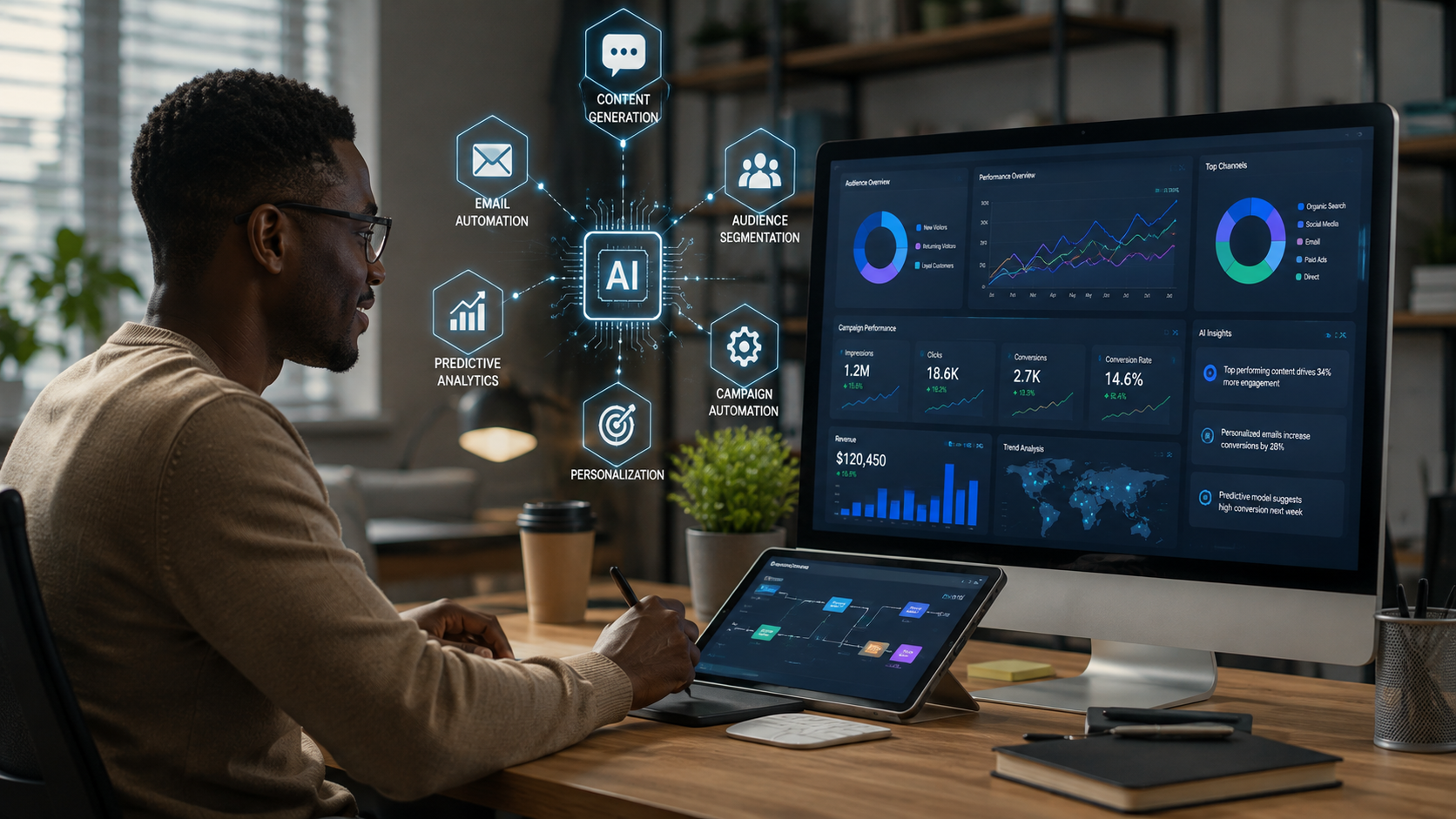
Artificial intelligence is one of the biggest forces shaping the future of digital marketing.
Marketers are increasingly using AI to generate ideas, analyze data, personalize content, automate repetitive tasks, and improve customer experiences. Experian reports that 94% of marketers surveyed are investing broadly in AI to improve efficiency and impact.
However, AI will not completely replace human marketers.
Instead, successful businesses will combine AI’s speed and analytical capabilities with human creativity, strategy, emotional intelligence, and brand understanding.
The goal isn’t simply to produce more content with AI. It is to produce better and more relevant content.
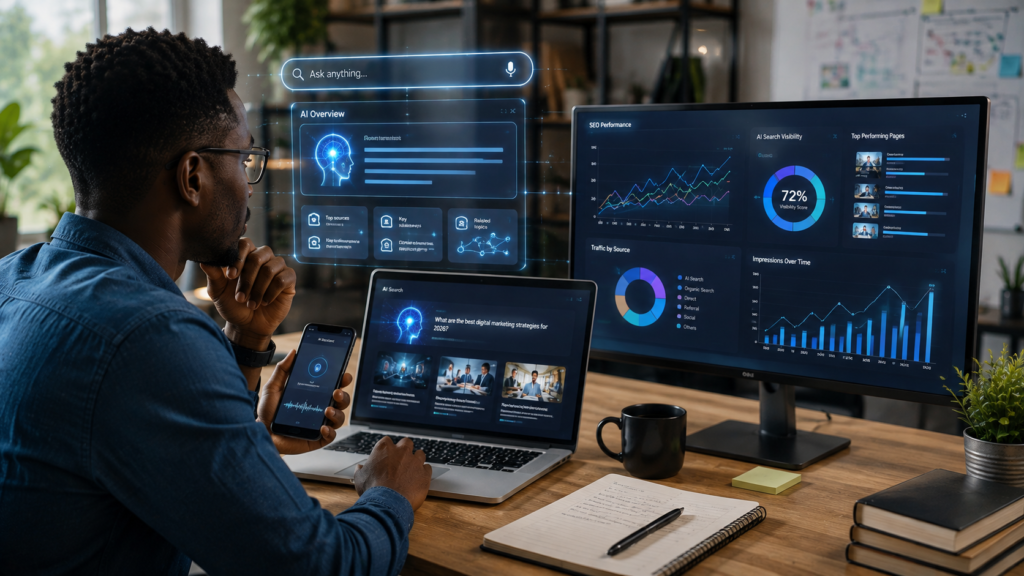
2. AI Search Will Change SEO
Traditional search is also evolving.
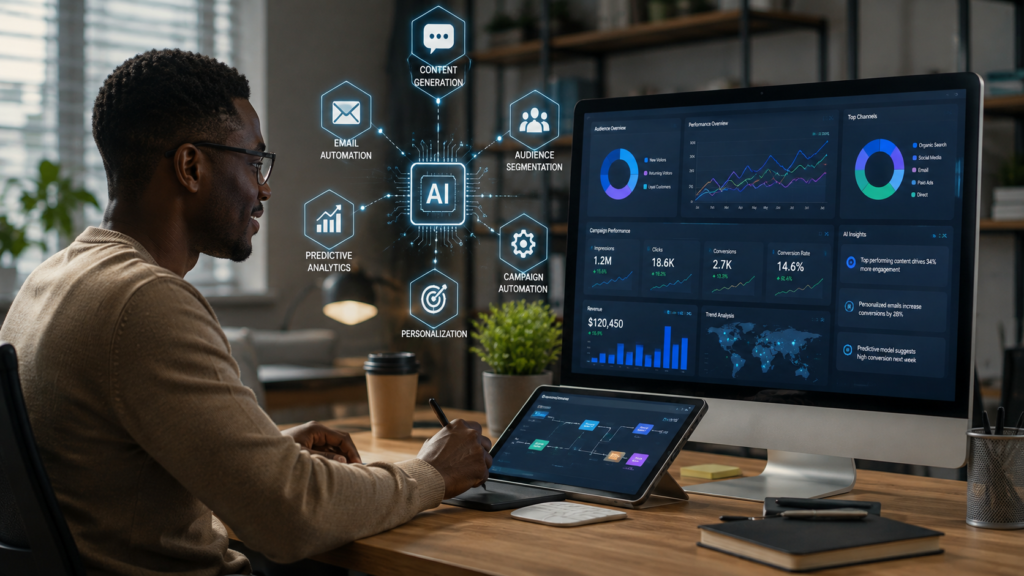
Consumers are increasingly using AI-powered search and conversational tools to research products, services, and questions. HubSpot’s 2026 research reports that many marketers are adapting their SEO strategies to account for AI search and answer engines.
This means marketers need to think beyond traditional keyword rankings.
Content should be:
- Helpful
- Accurate
- Easy to understand
- Well structured
- Authoritative
- Relevant to specific user questions
Businesses may increasingly focus on Answer Engine Optimization (AEO) and other approaches designed to improve visibility in AI-generated answers.
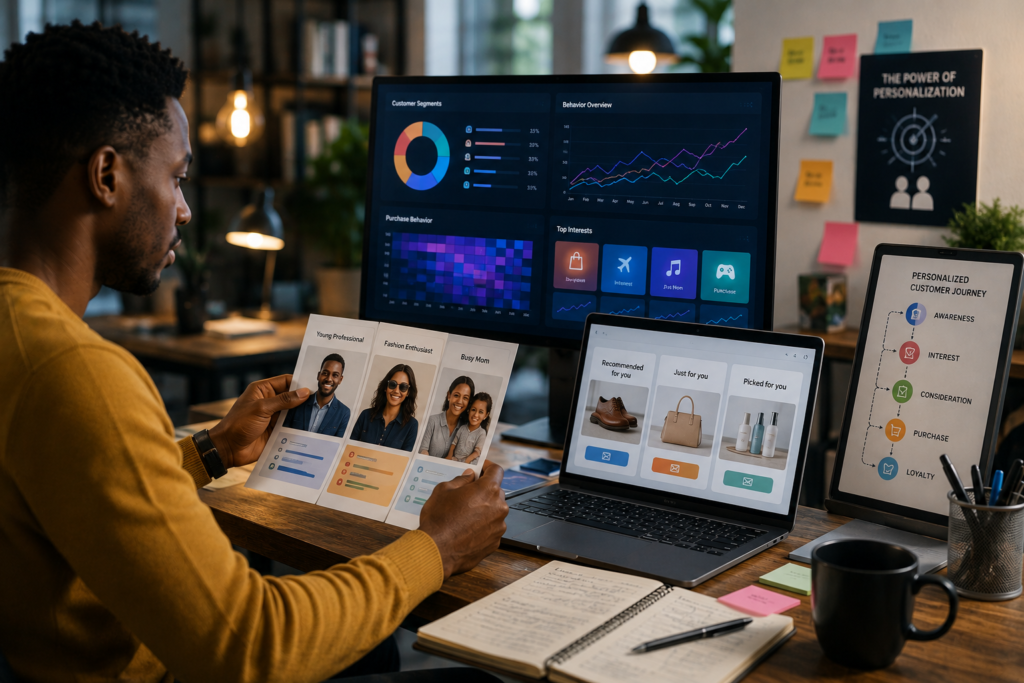
3. Personalization Will Become More Important
Customers increasingly expect brands to understand their needs and provide relevant experiences.
Instead of showing the same advertisement or email to everyone, businesses can use customer data and AI to create more personalized experiences.
For example, an online store could recommend products based on a customer’s previous browsing or purchasing behavior.
Research focusing on Nigerian SMEs also suggests growing interest in AI-powered personalization and its potential relationship with consumer purchase intentions.
However, personalization must be balanced with privacy. Customers want relevant experiences without feeling that businesses are misusing their personal information.
4. Short-Form Video Will Continue to Dominate
Short-form video remains one of the most important content formats in digital marketing.
Platforms such as Instagram, TikTok, YouTube, and Facebook have made short videos an important way for businesses to attract attention and demonstrate products.
HubSpot’s 2026 research identifies short-form video as a leading format for marketing usage and investment.
Businesses can use short-form videos for:
- Product demonstrations
- Tutorials
- Customer testimonials
- Behind-the-scenes content
- Educational content
- Entertainment
- Brand storytelling
The most successful videos don’t necessarily have to look expensive. Authentic, useful, and engaging content can be more effective than overly polished advertising.
5. Social Commerce Will Keep Growing
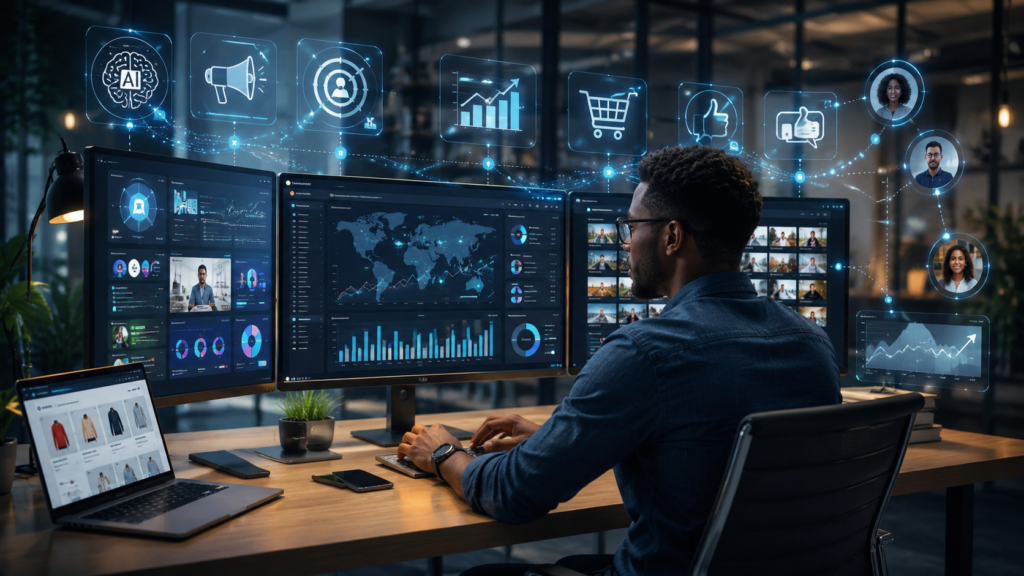
Social media is increasingly becoming more than a place for people to communicate. It is becoming a place where consumers discover, research, and purchase products.
HubSpot reports that social commerce is becoming increasingly important, while Shopify highlights social shopping, creator content, user-generated content, and conversational commerce as important developments for 2026.
This creates an opportunity for businesses to shorten the customer journey:
Social media → Product discovery → Product information → Purchase
For e-commerce businesses, integrating social media with online shopping can make it easier to turn attention into sales.
6. Influencer and Creator Marketing Will Become More Strategic
Influencer marketing is also evolving.
Instead of simply paying a celebrity to promote a product, brands are increasingly working with creators whose audiences closely match their target customers.
Smaller creators can be particularly valuable because they often have highly engaged communities.
Creators can also produce authentic videos, reviews, tutorials, and demonstrations that feel more natural than traditional advertisements.
In 2026, the focus is likely to shift from simply counting followers toward measuring engagement, relevance, trust, and actual business results.
7. First-Party Data Will Become More Valuable
As privacy expectations increase and the digital advertising environment continues to change, businesses are placing greater importance on first-party data.
First-party data is information a company collects directly from its customers, such as information from its website, purchases, subscriptions, or customer interactions.
Experian’s 2026 research found that 70% of B2B marketers surveyed planned to increase their use of first-party data.
Businesses should therefore focus on building direct relationships with customers rather than depending entirely on third-party platforms.
Email lists, loyalty programs, customer accounts, and direct communication can all become valuable assets.
8. AI-Powered Shopping and Agentic Commerce Will Grow
Another emerging development is agentic commerce, where AI systems can help consumers discover, compare, and potentially purchase products.
McKinsey identifies agentic commerce as one of the major pillars shaping the future of marketing.
Recent reporting also shows retailers adapting their websites and product information for AI-driven shopping discovery.
This could change how businesses think about product visibility. In the future, brands may need to make their product information easy for both humans and AI systems to understand.
How Businesses Can Prepare for the Future of Digital Marketing
Businesses don’t need to adopt every new technology immediately.
Instead, marketers should focus on a few fundamentals:
- Use AI strategically rather than relying on it for everything.
- Create genuinely useful content for customers.
- Optimize content for traditional search and AI-powered discovery.
- Invest in short-form video and social media.
- Build direct customer relationships and first-party data.
- Use analytics to measure actual business results.
- Protect customer privacy and maintain trust.
The companies that succeed won’t necessarily be those using the most technology. They will be the ones that use technology to solve real customer problems.
Conclusion
The future of digital marketing in 2026 is being shaped by artificial intelligence, changing search behavior, personalization, social commerce, short-form video, creator marketing, and privacy-conscious data strategies.
AI will continue to make marketing faster and more personalized, while human creativity and authenticity will remain essential. At the same time, businesses will need to adapt as consumers discover products through social platforms and AI-powered search.
The most important lesson for marketers is simple: don’t chase every trend—understand which trends are changing your customers’ behavior.
Businesses that combine technology with useful content, strong customer relationships, creativity, and trust will be better positioned to compete in the evolving digital marketplace.
References
- HubSpot — 2026 State of Marketing HubSpot Marketing Trends Report
- Experian — 2026 Digital Marketing Trends and Predictions Experian Digital Marketing Trends
- Gartner — The Future of Marketing: 2026 Trends and Predictions Gartner Marketing Trends 2026
- McKinsey — The Future of Marketing in the Age of AI McKinsey: AI and the Future of Marketing
- Shopify — Social Commerce Trends for 2026 Shopify Social Commerce Trends