
Introduction
Productivity has traditionally been measured by hours worked and tasks completed. Today, automation is reshaping that definition. Instead of focusing solely on human effort, organizations and individuals are increasingly relying on automated systems to handle repetitive, rule-based, and time-consuming processes.
Automation is no longer limited to manufacturing floors. It now influences marketing, finance, customer service, content creation, and daily administrative tasks. As a result, productivity is being redefined from “working harder” to “working smarter.”
1. What Is Automation in Modern Work?
Automation refers to the use of technology to perform tasks with minimal human intervention. This includes:
- Workflow automation
- Robotic process automation (RPA)
- AI-powered task management
- Automated reporting systems
- Smart scheduling tools
Platforms such as Zapier and HubSpot allow businesses to connect applications and automate processes like email sequences, lead tracking, and data entry.
Automation reduces manual repetition and increases operational efficiency.

2. From Task Execution to Strategic Thinking
One of the most significant shifts automation brings is the reallocation of human effort.
When routine tasks are automated:
- Employees focus on strategy and innovation
- Decision-making becomes data-driven
- Creative problem-solving increases
- Time is redirected toward growth initiatives
This shift enhances the quality of output rather than simply increasing the volume of activity.
3. Automation in Everyday Productivity
Automation is not limited to large enterprises. Individuals also benefit from:
- Automated bill payments
- Calendar scheduling assistants
- Email filters and rules
- Social media scheduling tools
These small automations reduce cognitive load and free mental energy for higher-value tasks.
The result is improved time management and reduced stress.
4. Data-Driven Efficiency
Automated systems generate measurable data. Businesses can track:
- Process completion time
- Conversion rates
- Customer engagement metrics
- Workflow bottlenecks
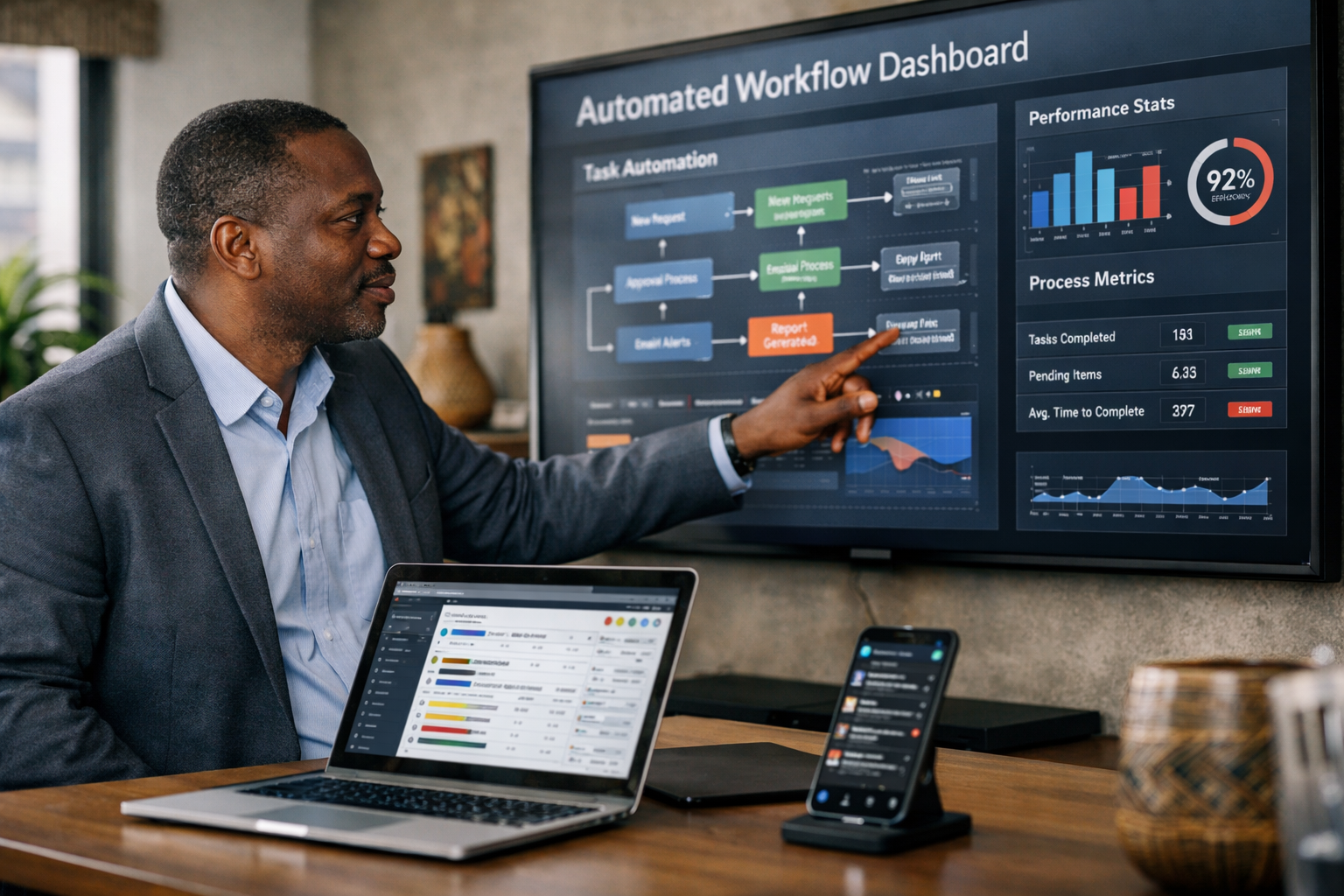
Analytics dashboards provide insights that support continuous optimization. Productivity becomes quantifiable and adjustable in real time.
5. Reducing Human Error
Manual processes are prone to mistakes, especially when repetitive tasks are involved. Automation improves consistency and accuracy.
For example:
- Automated accounting systems reduce calculation errors
- CRM systems prevent data duplication
- Inventory software updates stock levels instantly
By minimizing errors, organizations reduce operational risks and improve reliability.

6. Challenges and Considerations
Despite its advantages, automation presents challenges:
- Initial implementation costs
- Technical learning curves
- Job displacement concerns
- Over-reliance on technology
Organizations must balance automation with human oversight to ensure systems remain ethical, secure, and aligned with strategic goals.
Automation should support human capability — not eliminate critical thinking.
7. The Future of Automated Productivity
Emerging technologies such as artificial intelligence, machine learning, and predictive analytics are pushing automation further.
Future systems may:
- Anticipate workflow needs
- Automatically allocate resources
- Generate predictive business insights
- Personalize customer experiences at scale
As these technologies mature, productivity will increasingly depend on how effectively organizations integrate automation into their operations.

Conclusion
Automation is redefining productivity by shifting the focus from effort to efficiency. By reducing repetitive tasks, improving accuracy, and generating actionable data, automation empowers individuals and organizations to operate more strategically.
The future of productivity lies in human-machine collaboration. Those who embrace automation thoughtfully will gain a competitive advantage in an increasingly digital economy.
References
- McKinsey & Company. (2023). Automation and the Future of Work.
https://www.mckinsey.com/featured-insights/future-of-work - Deloitte Insights. (2022). Intelligent Automation in Business.
https://www2.deloitte.com/insights/us/en/focus/cognitive-technologies/intelligent-automation.html - World Economic Forum. (2023). The Impact of Automation on Jobs and Productivity.
https://www.weforum.org/agenda/archive/future-of-work/ - Harvard Business Review. (2022). How Automation Improves Workplace Productivity.
https://hbr.org/2022/08/how-automation-improves-productivity