
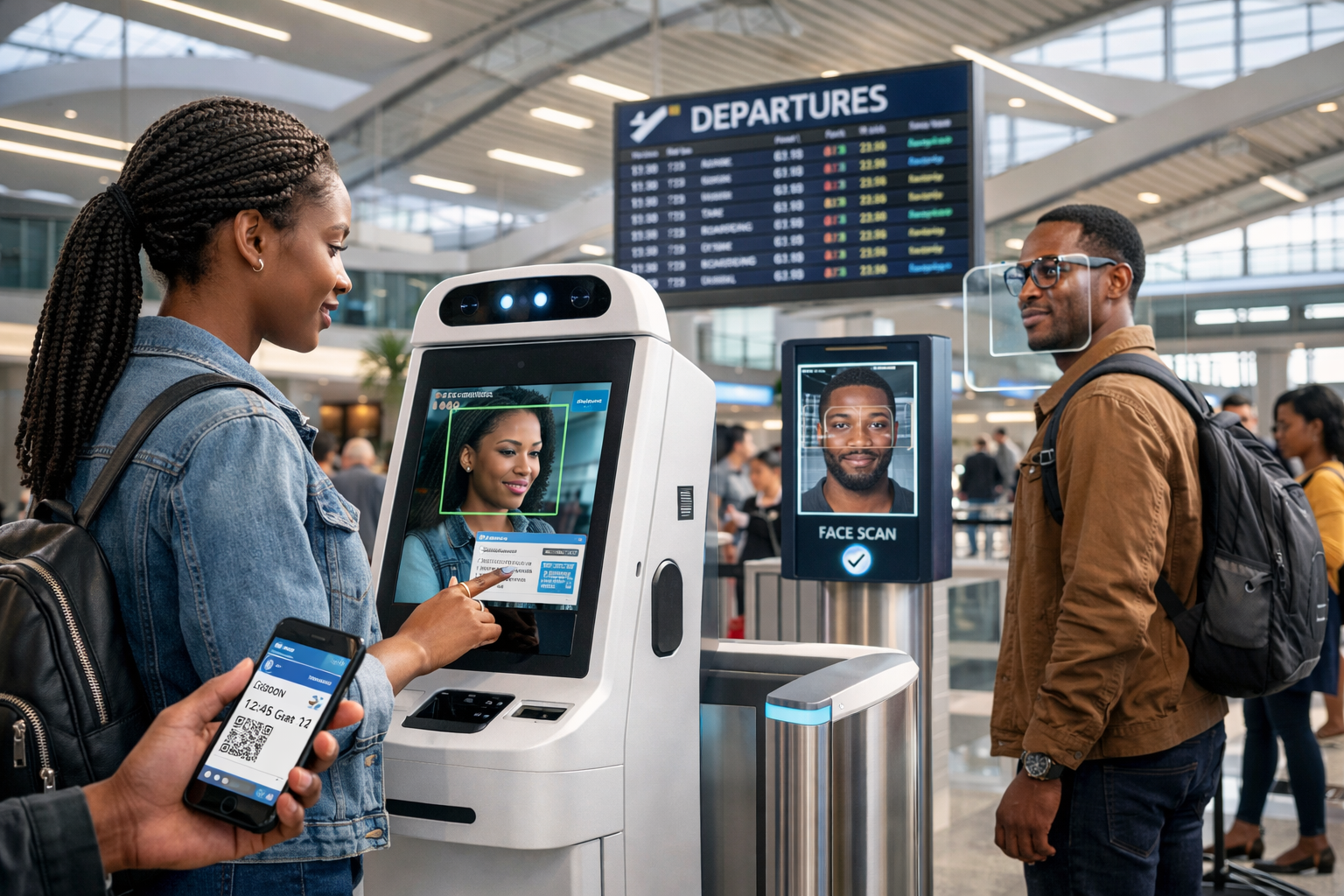
Travel is undergoing a quiet revolution. Artificial intelligence is transforming how trips are planned, booked, and experienced—while airports themselves are becoming smarter, faster, and more personalized. From predictive travel planning to facial-recognition boarding gates, the future of travel is increasingly driven by data and automation.
But what does this really mean for travelers?
1. How AI Is Changing Travel Planning
Gone are the days of endless tabs and comparison fatigue.
AI-powered travel tools now:
- Recommend destinations based on preferences and budget
- Predict the best times to book flights
- Suggest personalized itineraries
- Adapt plans in real time based on delays or disruptions
Travel planning is shifting from manual research to intelligent assistance.

2. Personalized Trips at Scale
AI allows travel companies to treat every traveler as unique.
Personalization includes:
- Customized hotel and flight suggestions
- Activity recommendations based on past behavior
- Language and cultural preferences
- Dynamic pricing and tailored offers
This level of personalization improves satisfaction while increasing brand loyalty.
3. Smart Airports: What Makes an Airport “Smart”?
Smart airports use connected technologies to improve efficiency and experience.
Key features include:
- Facial recognition for check-in and boarding
- Biometric security screening
- AI-powered crowd management
- Smart signage and navigation
- Automated baggage handling
The goal is simple: reduce friction at every touchpoint.
4. Faster, Safer Security and Immigration
Security is one of the biggest pain points in travel.
AI helps by:
- Detecting threats more accurately
- Reducing wait times with predictive queue management
- Enabling contactless identity verification
- Improving accuracy while minimizing human error
This makes airports both safer and more traveler-friendly.
5. Real-Time Operations and Fewer Delays
Behind the scenes, AI optimizes airport operations.
It’s used to:
- Predict flight delays before they happen
- Optimize gate assignments
- Manage runway traffic
- Reduce fuel consumption and emissions
Smarter operations benefit airlines, airports, and passengers alike.
6. AI-Powered Customer Support
Travel disruptions are inevitable—but responses are improving.
AI-driven chatbots and assistants:
- Provide instant updates on delays or cancellations
- Rebook flights automatically
- Answer common travel questions 24/7
- Reduce pressure on customer service teams
Faster responses improve traveler trust during stressful moments.
7. Sustainability and Smarter Travel
AI also plays a role in greener travel.
It helps:
- Optimize flight paths to reduce fuel usage
- Manage airport energy consumption
- Reduce waste through predictive demand planning
- Support sustainable travel choices
Smart travel isn’t just convenient—it’s more responsible.

8. Privacy and Ethical Concerns
With more data comes more responsibility.
Concerns include:
- Biometric data storage and usage
- Surveillance and consent
- Data security and breaches
- Transparency in AI decision-making
The future of smart travel depends on balancing innovation with trust.
9. Are Travelers Ready for Fully AI-Driven Journeys?
Adoption varies.
Some travelers welcome speed and automation, while others:
- Prefer human interaction
- Worry about data misuse
- Feel overwhelmed by technology
Successful implementation must prioritize choice and inclusivity.
10. What the Future of Travel Looks Like
In the coming years, we can expect:
- Seamless door-to-door AI-assisted journeys
- Airports that feel more like smart cities
- Fewer delays and smoother transfers
- More personalized, stress-free travel experiences
Travel won’t just be faster—it’ll be smarter.
Conclusio
AI-assisted trips and smart airports are redefining what it means to travel. By removing friction, personalizing experiences, and improving efficiency, AI is shaping a future where journeys are more intuitive and enjoyable. However, long-term success will depend on ethical implementation, transparency, and traveler trust. The future of travel isn’t just about technology—it’s about better experiences.
References (External Links)
- World Economic Forum – Airports of the Future
https://www.weforum.org - McKinsey – How AI Is Transforming the Travel Industry
https://www.mckinsey.com - International Air Transport Association (IATA) – Smart Airport Technology
https://www.iata.org - Forbes – AI and the Future of Travel Experience
https://www.forbes.com - MIT Technology Review – AI in Transportation and Mobility
https://www.technologyreview.com