
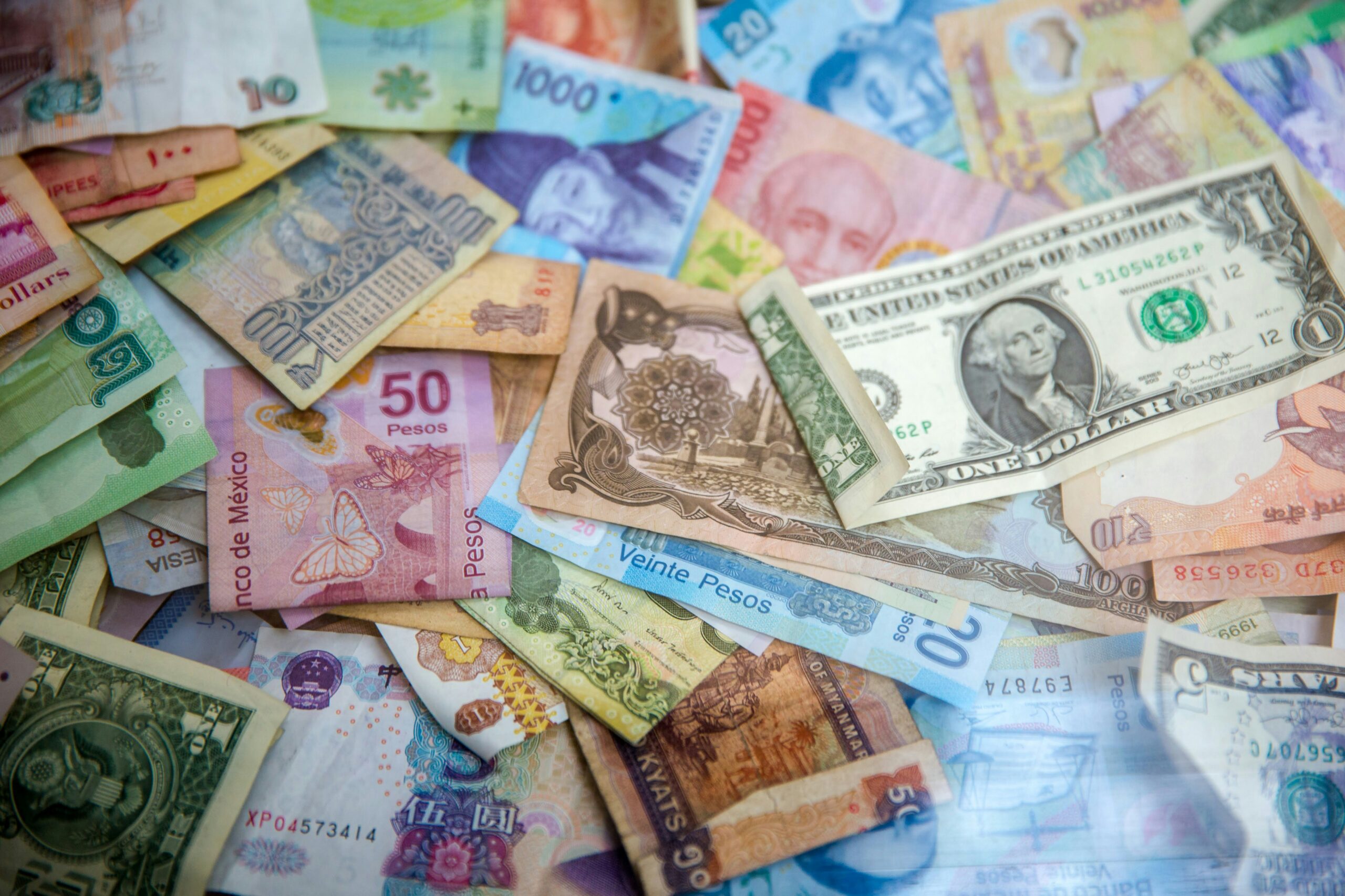
If you have ever traveled to another country or purchased something from an international website, you have probably noticed that the price is displayed in a different currency.
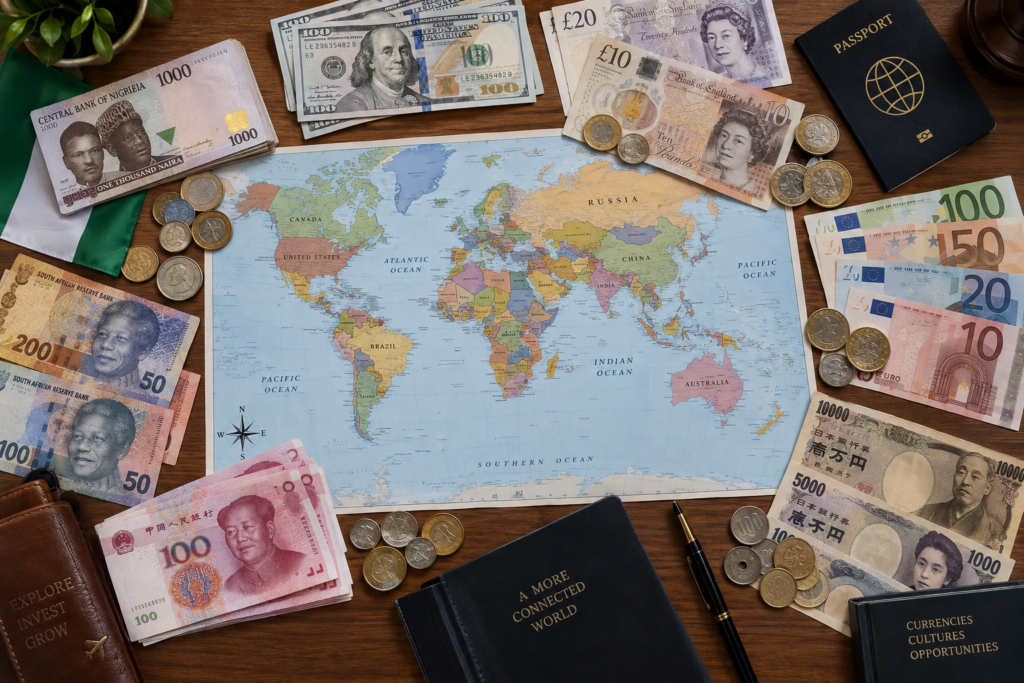
Nigeria uses the naira, the United States uses the dollar, the United Kingdom uses the pound sterling, Japan uses the yen, and many European countries use the euro. But why doesn’t the entire world simply use one currency?
The answer is connected to history, economics, government, trade, and national sovereignty. Different currencies allow countries to manage their economies according to their individual circumstances while also providing a system for buying, selling, saving, and investing.
Understanding why different currencies exist also helps explain exchange rates, inflation, international trade, and the changing value of money.
1. What Is a Currency?
A currency is a form of money officially recognized and used within a particular country or economic region.
Currency allows people to exchange goods and services without having to directly trade one product for another.
For example, instead of exchanging a bag of rice directly for a pair of shoes, a person can sell the rice for money and use that money to purchase the shoes.
Currencies serve several important purposes:
- They provide a medium of exchange.
- They provide a way to measure prices.
- They allow people to store purchasing power.
- They make economic transactions easier to organize.

2. Why Doesn’t the World Use One Currency?
One major reason is that countries have different economies and economic priorities.
Governments and central banks use monetary policies to respond to conditions within their economies.
Countries may have different:
- Inflation rates
- Economic growth rates
- Interest rates
- Employment conditions
- Levels of government debt
- Trade relationships
- Natural resources
- Political and economic structures
Having their own currency gives many countries greater control over monetary policy.
A single global currency would require countries with very different economic conditions to share the same monetary system, which could make economic management more difficult.
3. Currency Is Connected to National Sovereignty
Currency is also closely connected to national identity and government authority.
A country’s currency represents part of its economic independence. Governments generally have institutions responsible for issuing and managing the nation’s money.
For example, Nigeria uses the naira, while the United States uses the U.S. dollar.
Maintaining a national currency allows a country to operate its own monetary system rather than relying entirely on another country’s currency.
This is particularly important for countries that want control over their interest rates, money supply, and broader monetary policy.
4. How History Created Different Currencies
Different currencies developed over centuries.
Before modern national currencies existed, communities used various forms of money, including:
- Precious metals
- Coins
- Shells
- Livestock
- Agricultural products
- Commodity-based forms of payment
As kingdoms, states, and eventually modern nations developed, governments began establishing standardized forms of money.
Coins and banknotes made transactions easier and helped governments establish more consistent economic systems.
Over time, individual countries developed their own currencies and monetary institutions.
5. What Determines the Value of a Currency?
A currency’s value in relation to another currency is influenced by many economic factors.
These can include:
- Supply and demand
- Interest rates
- Inflation
- Economic growth
- Political stability
- International trade
- Investor confidence
- Government policies
For example, if demand for a particular currency increases, its value may rise relative to another currency.
If confidence in an economy falls, demand for its currency may decline, potentially causing its exchange rate to weaken.
Currency values therefore change constantly in the foreign exchange market.
6. What Is an Exchange Rate?
An exchange rate tells you how much one currency is worth compared with another.
For example, if someone wants to convert Nigerian naira into U.S. dollars, the applicable exchange rate determines how many naira are required to obtain a particular amount of dollars.
Exchange rates are important because international transactions often involve different currencies.
They affect:
- International travel
- Imports and exports
- Online shopping
- Foreign investments
- International salaries
- Remittances
- Global business operations
When exchange rates change, the cost of international goods and services can change as well.
7. Why Currency Values Are Not Equal
Different currencies have different exchange rates because they operate within different economic systems.
The numerical value printed on a banknote does not determine how powerful the currency is.
For example, having a banknote with a large numerical value does not automatically mean that the currency is more valuable than a currency with smaller denominations.
What matters is its purchasing power and its value relative to other currencies.
This is why comparing currencies requires more than simply looking at the numbers printed on their notes.
8. The Role of Central Banks
Central banks play an important role in managing national currencies.
They are generally responsible for monetary policy and may influence economic conditions through tools such as interest rates and other monetary measures.
Central banks can also help maintain confidence in a country’s financial system.
Their responsibilities vary from country to country, but they commonly focus on issues such as:
- Price stability
- Inflation
- Monetary policy
- Financial stability
- Currency management
- Banking-system oversight
The policies of a central bank can have a significant effect on the value and purchasing power of a currency.
9. How Inflation Affects Currency
Inflation occurs when the general level of prices for goods and services increases over time.
When inflation rises significantly, the purchasing power of money can decline.
For example, if the price of everyday products increases substantially, the same amount of money may buy fewer goods than it did previously.
Inflation can therefore affect people’s savings, wages, spending decisions, and perceptions of the value of their currency.
This is one reason why maintaining price stability is an important objective of monetary policy.
10. Why Some Countries Share a Currency
Although most countries have their own currencies, some countries choose to share one.
The most prominent example is the euro, which is used by countries that are members of the euro area.
Sharing a currency can make trade and travel easier because participating countries do not need to exchange money when conducting transactions within the currency area.
It can also reduce some of the costs and uncertainty associated with currency conversion.
However, sharing a currency also means participating countries give up some control over their individual monetary policies.
11. The U.S. Dollar and Its Global Importance
The U.S. dollar is one of the most important currencies in the international financial system.
It is widely used in international trade, financial markets, foreign exchange transactions, and as a reserve currency held by central banks.
Some countries also use the U.S. dollar alongside or instead of their domestic currency.
However, the global importance of the dollar does not mean that every country needs to adopt it.
Countries maintain their own currencies for economic, political, and historical reasons.
12. How Different Currencies Affect International Trade
Different currencies make international trade more complicated because buyers and sellers may use different forms of money.
Imagine a Nigerian company purchasing equipment from a company in Europe.
The Nigerian company may have revenue in naira, while the European supplier may request payment in euros.
The transaction therefore requires currency conversion.
Changes in exchange rates can affect the final cost of the transaction.
Businesses involved in international trade often monitor exchange rates carefully and may use financial strategies to manage currency risk.
13. Why Currency Conversion Matters in Digital Business
Different currencies are especially important in today’s digital economy.
A person in Nigeria can purchase software from a company based in the United States, subscribe to a service based in Europe, or sell products to customers in Asia.
Digital platforms therefore need systems that can handle multiple currencies.
This affects:
- E-commerce
- Online advertising
- Software subscriptions
- Freelance payments
- Digital services
- International marketplaces
- Creator earnings
For businesses operating internationally, displaying prices in the customer’s local currency can make the purchasing process easier to understand.
14. Currency and Purchasing Power
The exchange rate between two currencies does not tell the entire story about people’s living standards.
Purchasing power refers to how much goods and services a particular amount of money can actually buy.
A currency may have a relatively low exchange rate against the U.S. dollar while still allowing people within its domestic economy to purchase a wide range of locally priced goods and services.
Economists therefore use purchasing-power measures when comparing economies rather than relying only on market exchange rates.
15. Could the World Ever Have One Currency?
A single global currency is theoretically possible, but implementing one would be extremely complicated.
Countries would need to agree on a common monetary system and determine how decisions about interest rates, money supply, inflation, banking, and financial crises would be handled.
Different economies can also experience very different conditions at the same time.
One country might need lower interest rates to encourage economic activity, while another might need higher rates to control inflation.
A single global monetary policy could not necessarily respond effectively to every country’s needs.
For these reasons, the world continues to operate with multiple currencies.

16. Why Understanding Currency Matters
Understanding currencies is useful even if you never work in finance.
Currency affects everyday activities such as:
- Traveling abroad
- Buying products online
- Receiving money internationally
- Sending money overseas
- Investing
- Running an international business
- Comparing prices between countries
For entrepreneurs and digital marketers, currency awareness is particularly important when targeting customers in international markets.
Pricing, advertising budgets, revenue, and profitability can all be affected by exchange-rate movements.
Conclusion
The world uses different currencies because countries have different histories, economies, governments, and monetary priorities.
National currencies give countries the ability to manage their monetary systems according to their individual circumstances. At the same time, international financial markets and exchange rates allow these currencies to interact across borders.
Although having many currencies can make international transactions more complicated, modern banking and digital payment systems have made currency conversion easier than ever.
As businesses, consumers, and digital platforms become increasingly global, understanding currencies and exchange rates is becoming an important part of participating in the modern economy.