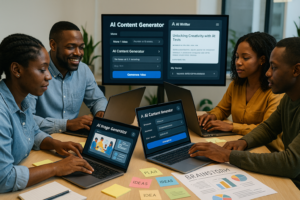

Artificial intelligence is no longer a futuristic concept in marketing—it’s a core part of how brands attract, engage, and convert audiences today. From personalized content to predictive analytics, AI is reshaping digital marketing strategies and changing how businesses connect with customers at scale.
Marketing is no longer just data-driven—it’s intelligence-driven.
1. AI-Powered Customer Insights
AI helps marketers understand customers beyond surface-level data.
With AI, brands can:
- Analyze large volumes of user behavior data
- Identify patterns and trends
- Predict customer needs and preferences
This leads to smarter, faster, and more accurate decision-making.
2. Hyper-Personalized Marketing Experiences
Personalization has moved beyond using a customer’s name.
AI enables:
- Personalized product recommendations
- Dynamic website content
- Customized email campaigns
- Targeted ads based on real-time behavior
Customers are more likely to engage with brands that feel relevant.
3. Smarter Content Creation and Optimization
AI tools assist in creating and improving content.
They help marketers:
- Generate content ideas
- Optimize headlines and copy
- Improve SEO performance
- Test variations automatically
AI doesn’t replace creativity—it enhances it.
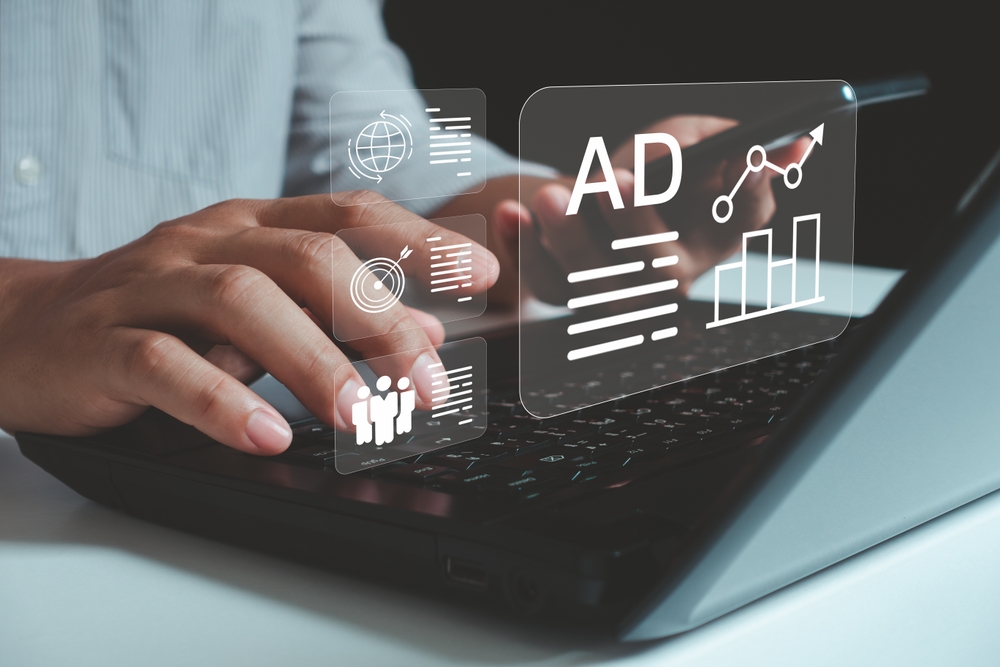
4. Predictive Analytics for Better Campaign Performance
AI predicts outcomes before campaigns launch.
Predictive models can:
- Forecast conversions and engagement
- Identify high-value audiences
- Optimize ad spend allocation
This reduces guesswork and improves ROI.
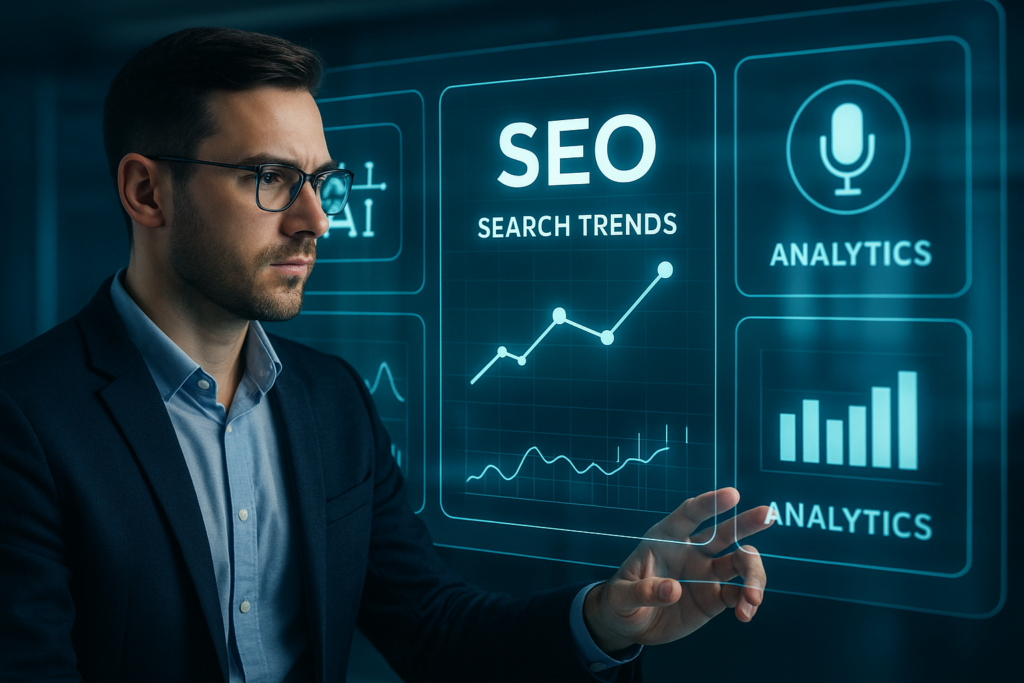
5. AI in Search and SEO Strategies
Search engines are increasingly powered by AI.
AI impacts SEO through:
- Search intent analysis
- Voice and visual search optimization
- Content relevance scoring
- Semantic search understanding
Marketers must focus on user intent, not just keywords.
6. Chatbots and Conversational Marketing
AI chatbots improve customer interaction.
They provide:
- 24/7 customer support
- Instant responses
- Personalized recommendations
- Lead qualification
Conversational AI improves both experience and efficiency.
7. Automated Advertising and Media Buying
AI optimizes ad delivery in real time.
AI-driven advertising allows:
- Automated bidding
- Audience targeting refinement
- Performance optimization across platforms
This leads to higher conversions with lower costs.
8. Data-Driven Decision-Making at Scale
AI processes data faster than humans ever could.
This enables:
- Real-time performance tracking
- Rapid testing and iteration
- Scalable marketing operations
Marketing teams can focus on strategy instead of manual analysis.
9. Ethical and Privacy Considerations
With increased AI use comes responsibility.
Marketers must:
- Respect user privacy
- Use data transparently
- Avoid manipulative personalization
- Follow data protection regulations
Trust is a competitive advantage in the AI era.
10. The Future of AI in Digital Marketing
AI will continue to evolve.
Future trends include:
- Advanced predictive personalization
- AI-generated video and voice content
- Deeper customer journey automation
- Smarter cross-channel integration
Brands that adapt early will stay ahead.
Conclusion
AI is transforming digital marketing by making it more intelligent, personalized, and efficient. Rather than replacing marketers, AI empowers them to focus on strategy, creativity, and human connection. As technology advances, the most successful brands will be those that combine AI-driven insights with authentic, customer-centered marketing.
References (External Links)
- Harvard Business Review – AI in Marketing
https://hbr.org - McKinsey & Company – The AI-Powered Marketing Organization
https://www.mckinsey.com - Forbes – How AI Is Changing Digital Marketing
https://www.forbes.com - Google – AI and the Future of Search & Ads
https://www.google.com - HubSpot – AI Marketing Statistics and Trends
https://www.hubspot.com