
Introduction
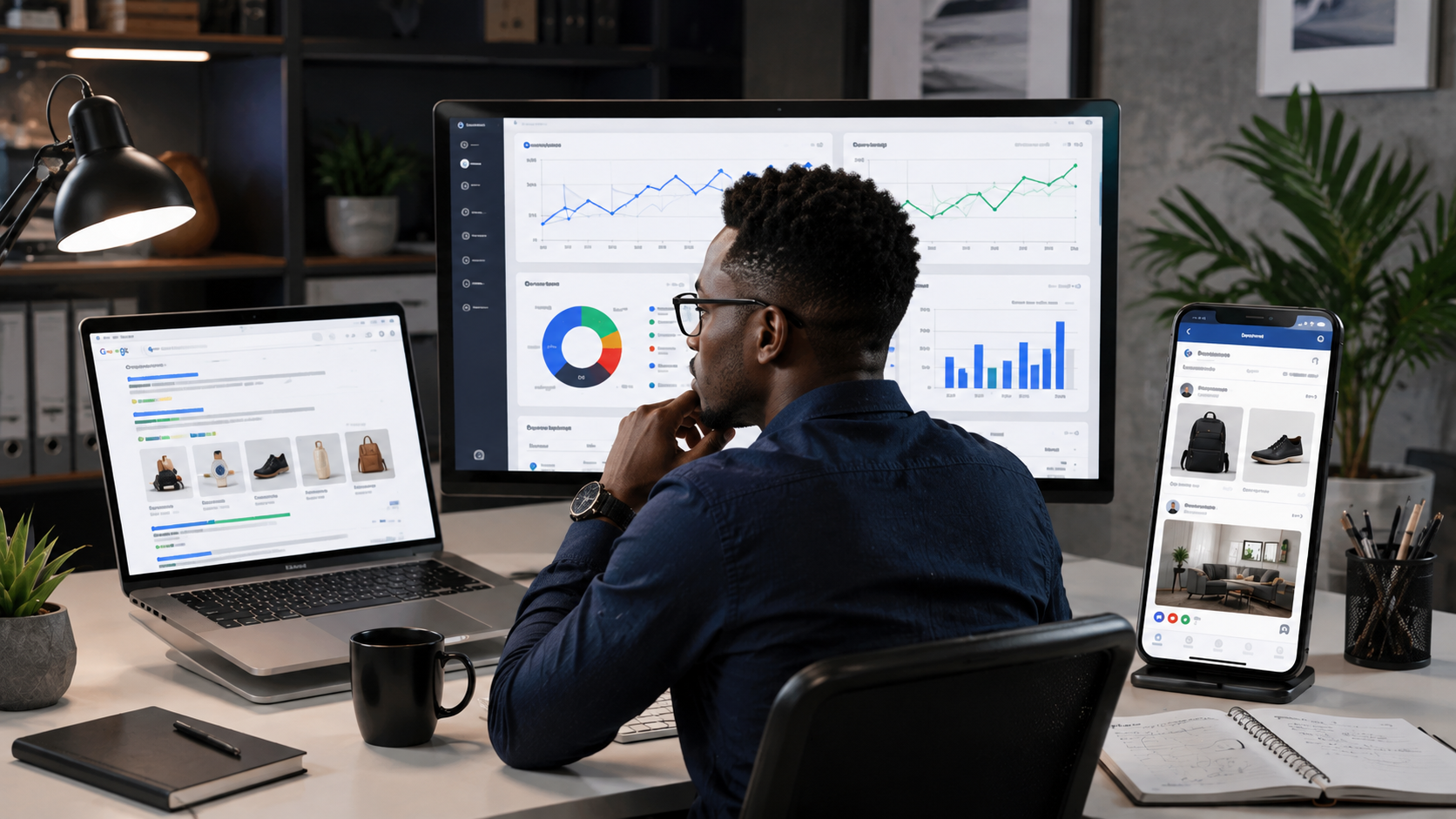
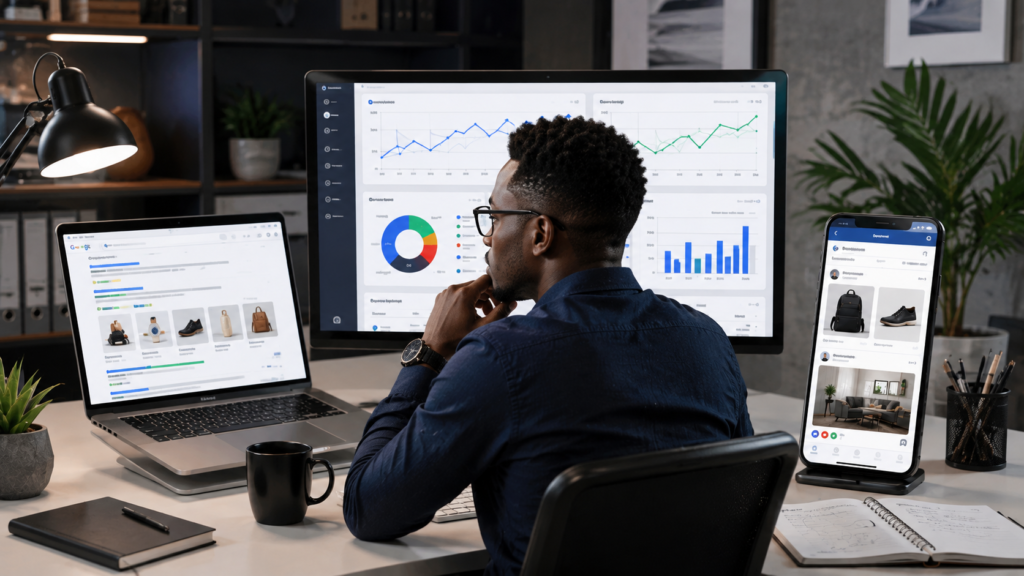
Paid advertising has become an important part of digital marketing Whether you run an online store, local business, service company, or personal brand, platforms such as Google Ads and Facebook Ads can help you reach potential customers.
However, choosing between them can be difficult.
Google Ads vs Facebook Ads is not really a question of which platform is universally better. Both platforms have different strengths. Google Ads can help businesses reach people who are actively searching for products and services, while Facebook Ads can help businesses discover and reach audiences based on characteristics, interests, and other available targeting signals.
So, which advertising platform should you choose?
The answer depends on your business goals, target audience, budget, product, and where your customers are in the buying journey.
What Are Google Ads?
Google Ads is Google’s advertising platform that allows businesses to promote their products and services across Google’s advertising ecosystem.
One of its major strengths is its ability to connect businesses with people who are already searching for something.
For example, imagine someone searches for “best web designer in Lagos.” A web design company could use Google Ads to appear for relevant searches.
This can make Google Ads particularly useful for capturing existing demand.
Businesses can use Google advertising to pursue goals such as:
- Generating leads
- Increasing website traffic
- Promoting products
- Increasing sales
- Getting phone calls
- Reaching local customers
- Building brand awareness
The important point is that Google can put an advertisement in front of someone at the moment they are looking for a relevant solution.
What Are Facebook Ads?
Facebook Ads are paid advertisements delivered through Meta’s advertising ecosystem, including Facebook and Instagram placements.
Rather than relying primarily on someone searching for a specific keyword, Facebook advertising can help businesses reach audiences using factors such as location, age, interests, and other available audience signals. Meta also provides options such as Custom Audiences and Lookalike Audiences for reaching existing or similar audiences.
This makes Facebook Ads particularly useful for businesses that want to introduce products to potential customers who may not already be searching for them.
Facebook and Instagram are also highly useful for visual advertising, including image, video, carousel, and other formats.
Google Ads vs Facebook Ads: The Biggest Difference
The easiest way to understand the difference is:
Google Ads generally captures existing demand, while Facebook Ads can help create or stimulate demand.
Imagine someone searches:
“Buy running shoes online.”
That person has already demonstrated an interest in buying running shoes. A relevant Google advertisement can appear in response to that search.
Now imagine someone is scrolling through Facebook or Instagram and sees an attractive advertisement for a new pair of running shoes.
They may not have been planning to buy shoes, but the advertisement could create interest.
This is one of the biggest differences between the two advertising platforms.
Google Ads vs Facebook Ads: Key Differences
| Feature | Google Ads | Facebook Ads |
|---|---|---|
| Main strength | Capturing search demand | Audience discovery and targeting |
| User intent | Often higher when based on relevant searches | Can reach users before they actively search |
| Targeting | Keywords, location, audiences and other signals | Audience characteristics, interests and other available signals |
| Popular formats | Search, display, shopping, video | Image, video, carousel and other social placements |
| Best suited for | Services, local businesses, high-intent searches | Visual products, brand awareness and discovery |
| Customer journey | Often closer to the point of demand | Often earlier in the buying journey |
Which Platform Has Better Audience Targeting?
Both Google Ads and Facebook Ads offer sophisticated targeting, but their approaches are different.
Google Ads can connect advertising with searches and other audience signals. This can be particularly useful when your customers know exactly what they need.
Facebook Ads can help advertisers define and reach audiences using factors such as age, location, interests, and other available signals. Meta also offers Custom Audiences and Lookalike Audiences.
For example, a fashion business might use Facebook and Instagram to reach people who are likely to be interested in fashion-related products.
A plumbing company, meanwhile, might benefit more from Google Ads because people who need emergency plumbing services are likely to search for a plumber when the problem occurs.
Which Is Cheaper: Google Ads or Facebook Ads?
There is no universal answer to whether Google Ads or Facebook Ads is cheaper.
Advertising costs can change depending on factors such as:
- Industry
- Competition
- Location
- Audience
- Campaign objective
- Ad quality
- Keywords
- Landing page
- Conversion rate
- Time of year
A common mistake is to judge advertising solely by the cost of a click.
A cheaper click isn’t necessarily better if those clicks don’t produce customers.
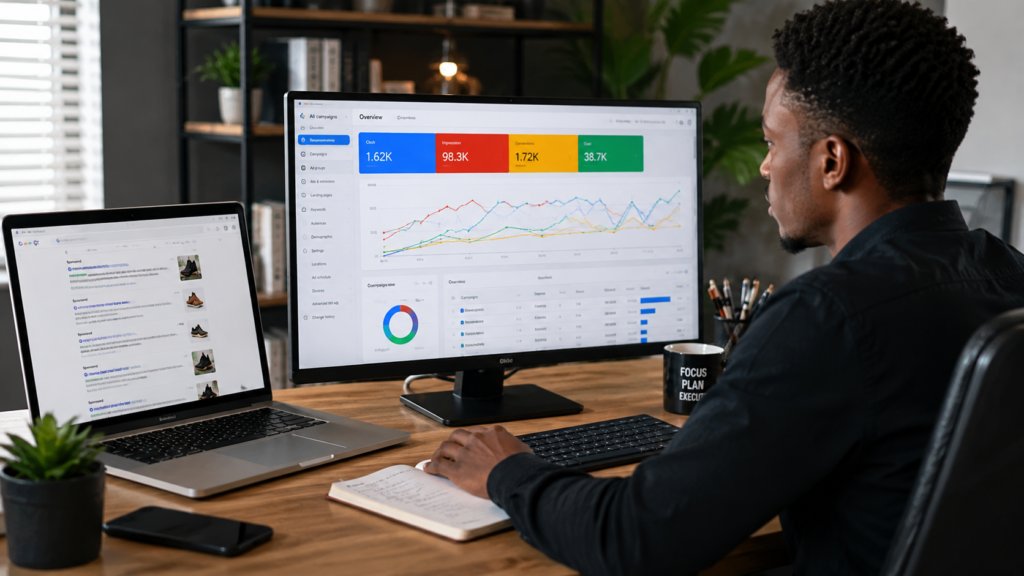
Instead, businesses should pay attention to metrics such as:
- Cost per click (CPC)
- Click-through rate (CTR)
- Conversion rate
- Cost per acquisition (CPA)
- Return on ad spend (ROAS)
- Revenue
- Profit
The real question should be:
How much does it cost me to acquire a customer, and how much profit does that customer generate?
Which Is Better for Small Businesses?
The best option depends on what the business sells.
Local Service Businesses
Businesses such as plumbers, electricians, lawyers, mechanics, cleaning companies, and repair services can benefit from Google Ads because customers often search for these services when they need them.
For example:
“AC repair near me”
A business offering AC repair could target relevant searches and potentially reach someone who needs the service immediately.
Fashion and Beauty Businesses
Fashion, beauty, cosmetics, and lifestyle brands may benefit significantly from Facebook and Instagram advertising because these products can be presented visually.
A high-quality image or video can introduce a product to someone who wasn’t previously searching for it.
E-commerce Businesses
E-commerce businesses can potentially benefit from both platforms.
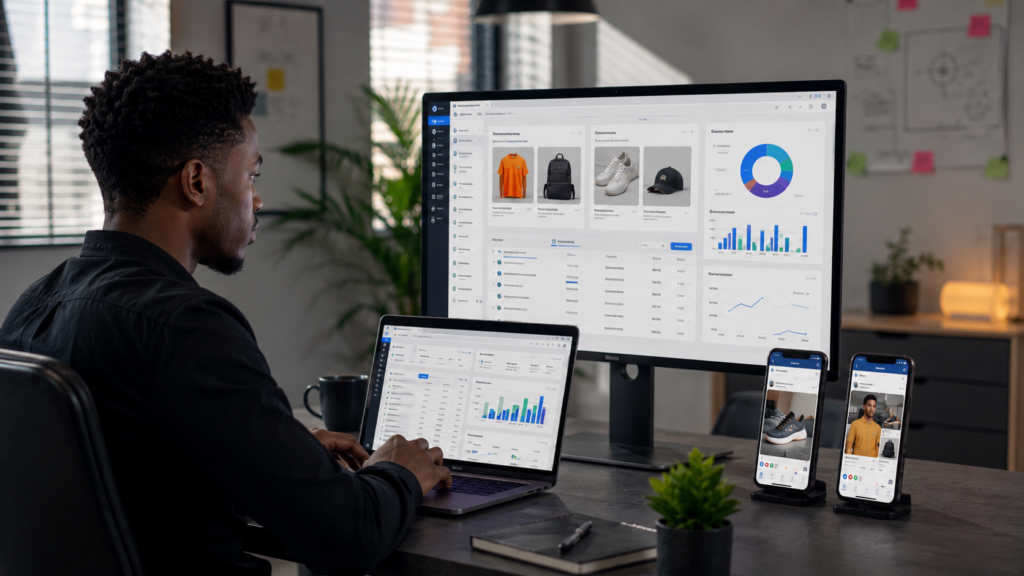
Google can help capture people actively searching for products, while Facebook and Instagram can help introduce products to new audiences and bring previous visitors back to the brand.
Advantages of Google Ads
1. Strong Search Intent
People who search for a specific product or service may already have a problem they want to solve.
2. Multiple Advertising Options
Google’s advertising ecosystem includes different campaign types and placements, allowing businesses to choose approaches suited to their goals.
3. Useful for Local Businesses
Local businesses can use relevant searches and geographic targeting to reach potential customers in their service areas.
4. Measurable Performance
Advertisers can track important campaign metrics and use performance data to improve their campaigns.
Disadvantages of Google Ads
1. Competitive Keywords Can Be Expensive
Highly competitive commercial keywords can attract many advertisers.
2. Requires Ongoing Optimization
Launching a campaign is not enough. Advertisers need to monitor performance and make adjustments.
3. Depends on Search Demand
If very few people search for your product or service, search advertising may have limited reach.
Advantages of Facebook Ads
1. Strong Audience Targeting
Meta advertising can help businesses reach audiences using factors such as age, location, interests, and other available signals.
2. Excellent Visual Formats
Visual advertising can be particularly effective for products that are easy to demonstrate through images and video. Meta’s advertising ecosystem supports multiple creative formats and placements.
3. Good for Brand Awareness
Facebook and Instagram can help businesses introduce their brands to potential customers who may not already know about them.
4. Useful for Retargeting
Businesses can use available audience tools to reconnect with people who have previously interacted with their business.
Disadvantages of Facebook Ads
1. Users May Not Be Ready to Buy
Someone scrolling through social media may not have an immediate intention to purchase.
2. Creative Quality Matters
Poor images, videos, headlines, or offers can make an advertising campaign less effective.
3. Audience Fatigue
If the same audience sees the same advertisement too frequently, performance can decline.

Google Ads vs Facebook Ads for E-commerce
E-commerce businesses don’t necessarily need to choose only one platform.
Google Ads can help capture people who are actively searching for products.
For example:
“Buy men’s sneakers online.”
Facebook and Instagram can introduce products to new audiences through visual content.
A business could therefore build a customer journey like this:
Facebook/Instagram → Product discovery → Website → Retargeting → Purchase
At the same time, another customer could follow this path:
Google search → Product advertisement → Website → Purchase
Using both platforms allows businesses to reach customers at different stages of the buying journey.
Should You Use Google Ads and Facebook Ads Together?
If your budget and resources allow it, using both platforms can be a strong strategy.
For example, Facebook and Instagram could help build awareness around your brand and products, while Google Ads could capture people who later search for your business or product.
You can also test different campaigns and compare their results.
However, using two platforms doesn’t automatically guarantee better results. Your campaigns still need:
- A clear target audience
- Strong advertising creative
- Relevant landing pages
- A compelling offer
- Proper conversion tracking
- Continuous testing and optimization
Google Ads vs Facebook Ads: Which Should You Choose?
Choose Google Ads if:
- People actively search for your product or service.
- You operate a local service business.
- Your customers usually know what they need.
- You want to capture high-intent searches.
- Lead generation is a major goal.
Choose Facebook Ads if:
- Your products are visually appealing.
- You want to build brand awareness.
- You are launching a new product.
- You want to reach specific audiences.
- Social media plays an important role in your marketing strategy.
If your business can benefit from both, consider testing both platforms rather than assuming one will automatically outperform the other.

Final Verdict
So, Google Ads vs Facebook Ads: which should you choose?
There is no universal winner.
Google Ads is often a strong choice for capturing existing demand, especially when people are actively searching for a product or service. Facebook Ads can be particularly useful for audience discovery, visual advertising, brand awareness, and reaching potential customers before they actively search.
The best advertising platform is ultimately the one that helps your business reach the right audience and produce profitable results.
Instead of asking, “Which platform is better?”, ask:
“Where are my customers, what do they need, and what are they doing before they buy?”
Once you understand your customer’s journey, choosing between Google Ads and Facebook Ads becomes much easier.
References
- Google Ads — Official Google Advertising Platform
Google Ads - Meta Audience Network — Advertising Formats and Resources
Meta Audience Network - Meta Audience Network — Audience Targeting
Meta Audience Targeting Resources - Meta Audience Network — Ad Components and Formats
Meta Ad Formats and Components