
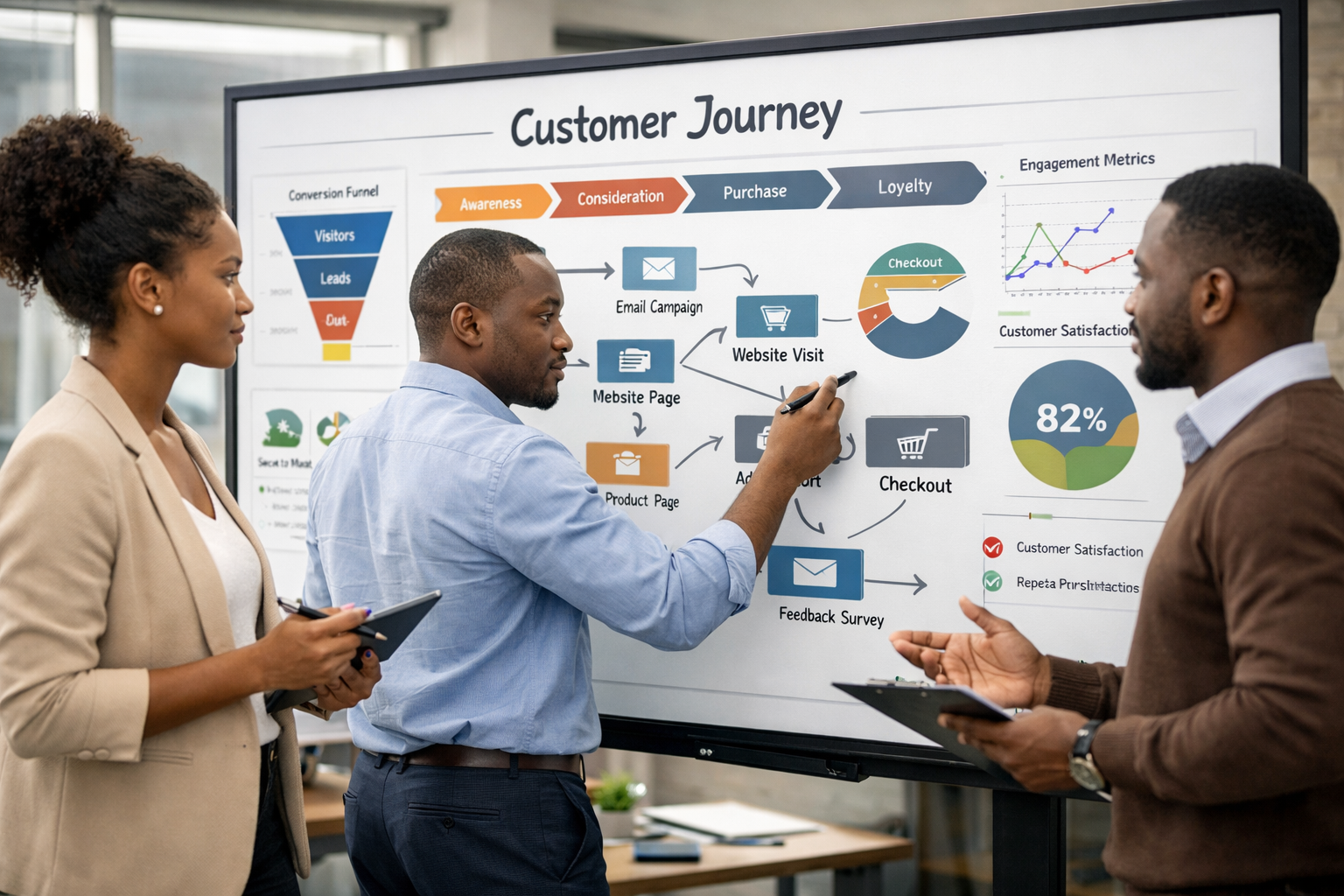
For years, marketers relied on the traditional sales funnel to understand customer behavior. Awareness at the top, conversion at the bottom—it was simple, linear, and predictable. But today’s customers no longer move in straight lines.
Modern buying behavior is dynamic, multi-channel, and deeply personal. This reality has driven a major shift in marketing thinking: from rigid funnels to customer journeys.
1. Why the Traditional Funnel Is No Longer Enough
The classic funnel assumes customers:
- Move step-by-step toward a purchase
- Interact with a brand through limited touchpoints
- Make decisions quickly and logically
In reality, customers:
- Jump between channels
- Pause, return, and reconsider
- Seek validation from reviews, peers, and content
- May convert, disengage, and re-engage multiple times
The funnel oversimplifies a much more complex process.

2. What Is a Customer Journey?
A customer journey represents the entire experience a person has with a brand over time.
It includes:
- First exposure to the brand
- Ongoing interactions across platforms
- Emotional responses and expectations
- Post-purchase experiences and loyalty
Unlike funnels, journeys are non-linear, continuous, and customer-driven.
3. The Rise of Customer-Centric Marketing
The shift toward journeys reflects a broader move toward customer-centricity.
Brands now focus on:
- Understanding customer needs at every stage
- Delivering value before, during, and after purchase
- Building relationships, not just conversions
Success is measured by long-term engagement, not just immediate sales.
4. Multiple Touchpoints, One Experience
Customers interact with brands through many channels:
- Social media
- Websites and blogs
- Email campaigns
- Reviews and community discussions
- Customer support
The journey approach ensures these touchpoints feel connected, consistent, and intentional rather than fragmented.
5. Personalization Across the Journey
Customer journeys allow for deeper personalization.
Instead of generic messaging, brands can:
- Tailor content based on behavior and intent
- Adapt messaging to different stages of the journey
- Deliver relevant experiences in real time
Personalization works best when it supports the customer, not overwhelms them.
6. The Role of Data and Technology
Data enables journey-based marketing.
Key tools include:
- Customer relationship management (CRM) systems
- Analytics and attribution models
- AI-driven insights and automation
- Behavioral tracking and segmentation
When used ethically, data helps brands anticipate needs and improve experiences.
7. From Conversion to Connection
Funnels prioritize conversion. Journeys prioritize connection.
Journey-based marketing focuses on:
- Trust-building
- Education and support
- Emotional engagement
- Long-term loyalty and advocacy
Customers don’t just buy products—they buy experiences.
8. Measuring Success Beyond the Funnel
With customer journeys, success metrics evolve.
Instead of only tracking:
- Click-through rates
- One-time conversions
Brands also measure:
- Engagement over time
- Customer satisfaction
- Retention and repeat purchases
- Lifetime value
These metrics reflect sustainable growth.
9. How Brands Can Transition to a Journey Mindset
To move beyond funnels:
- Map customer touchpoints and pain points
- Align teams around customer experience
- Create content for different journey stages
- Listen to customer feedback
- Continuously optimize experiences
The journey is never finished—it evolves with the customer.

Conclusion
The shift from funnels to customer journeys reflects how people actually behave in today’s digital world. Customers expect relevance, consistency, and meaningful interactions at every stage—not just a push toward purchase. Brands that embrace journey-based marketing build stronger relationships, earn trust, and create long-term value in an increasingly competitive landscape.
References (External Links)
- Harvard Business Review – The New Rules of Customer Experience
https://hbr.org - McKinsey – The Consumer Decision Journey
https://www.mckinsey.com - HubSpot – Funnel vs Customer Journey Explained
https://blog.hubspot.com - Forbes – Why Customer-Centric Marketing Wins
https://www.forbes.com - Gartner – Customer Journey Mapping Insights
https://www.gartner.com