
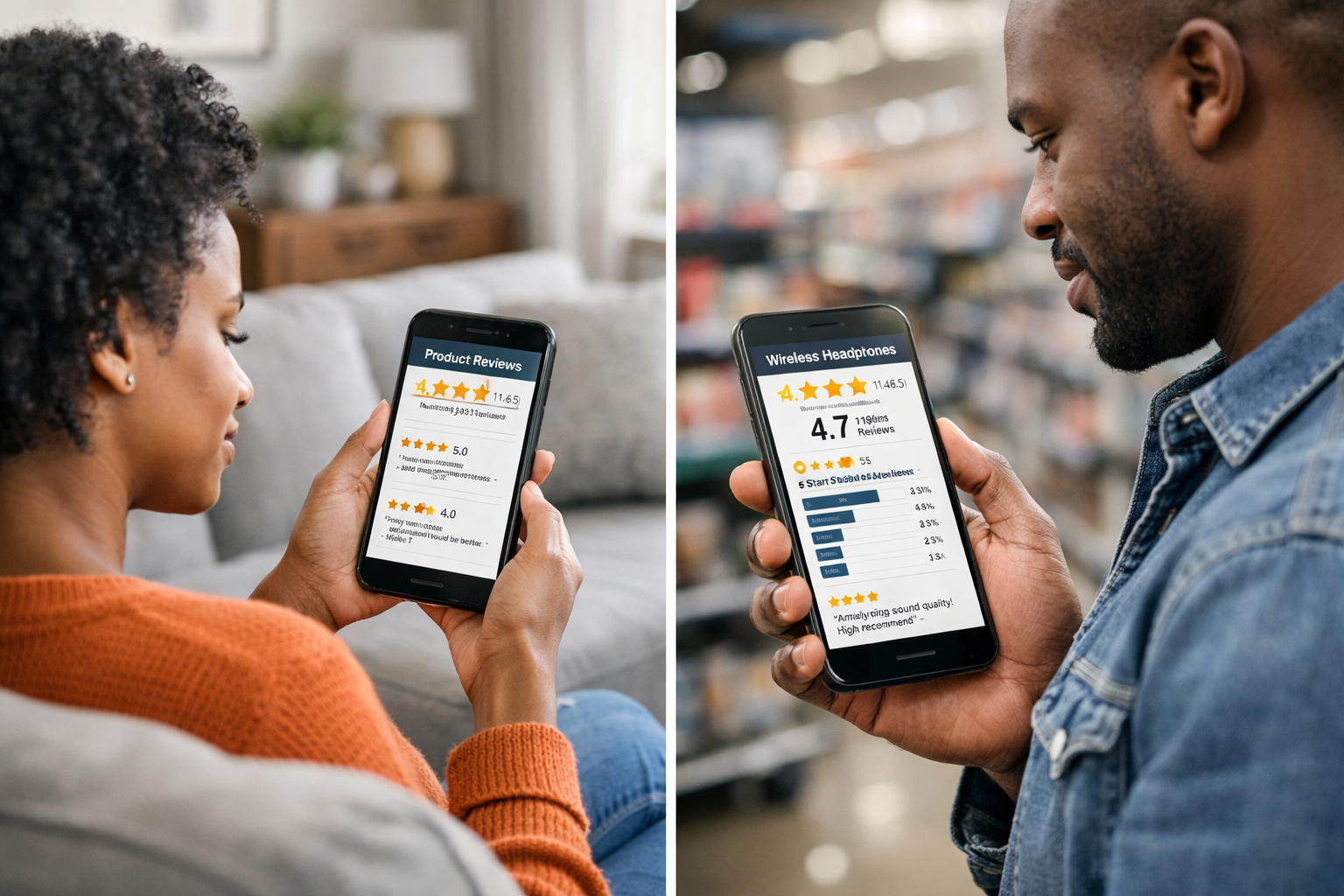
In a world of endless choices, consumers rarely make decisions in isolation. Before buying a product, booking a service, or trying a new brand, people look to others for guidance. This behavior is driven by social proof — the psychological tendency to follow the actions and opinions of others.
Online reviews, ratings, and testimonials have become some of the most powerful forces shaping modern purchasing decisions.
1. What Is Social Proof?
Social proof is a psychological concept that explains how people rely on others to determine what is correct or desirable.
Common forms of social proof include:
- Customer reviews and ratings
- Testimonials and case studies
- User-generated content
- Influencer recommendations
- Popularity indicators (sales numbers, followers, downloads)
When people see others approving a product, it reduces uncertainty and builds confidence.
2. Why Reviews Matter So Much
Reviews act as digital word-of-mouth.
They:
- Provide real-life experiences
- Reduce perceived risk
- Offer social validation
- Help buyers justify decisions
In many cases, reviews are more trusted than brand advertising because they come from peers, not companies.

3. The Psychology Behind Review Influence
Several psychological principles explain why reviews are so persuasive.
a. Conformity
People naturally want to align with group behavior. If many others approve of a product, it feels safer to choose it.
b. Authority
Verified buyers, experts, or detailed reviews carry more weight and credibility.
c. Risk Reduction
Positive reviews reassure buyers that they won’t regret their purchase.
d. Cognitive Ease
Reading others’ experiences simplifies decision-making, saving mental effort.
4. The Power of Negative Reviews
Surprisingly, negative reviews can increase trust.
- A mix of positive and negative reviews feels more authentic
- Constructive criticism helps buyers make informed decisions
- How a brand responds to negative feedback influences perception
A perfect five-star rating can feel less trustworthy than a realistic one.
5. Review Volume vs. Review Quality
Both quantity and quality matter.
- Volume signals popularity and reliability
- Quality offers detailed insights and emotional resonance
A few thoughtful, detailed reviews often outperform dozens of generic ones.
6. Social Proof Across Different Channels
Social proof influences decisions across multiple touchpoints:
- E-commerce product pages
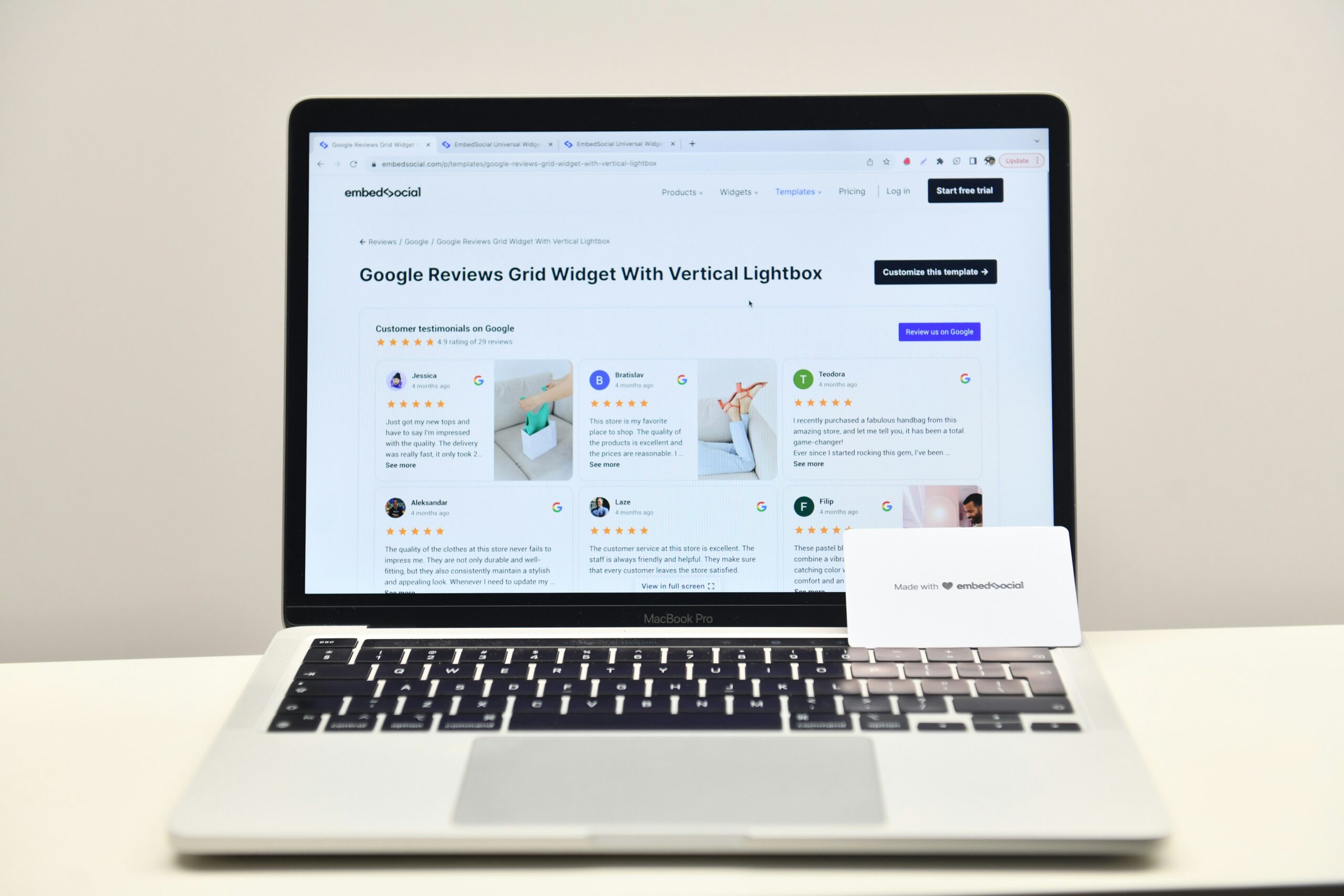
- Google and local business listings
- Social media comments and shares
- Influencer and creator endorsements
- Case studies on websites
Consistency across channels strengthens credibility.
7. How Businesses Can Use Social Proof Effectively
To leverage reviews and social proof:
- Encourage honest customer feedback
- Display reviews prominently
- Respond professionally to all reviews
- Use testimonials in marketing materials
- Highlight user-generated content
Transparency and authenticity are key — manipulation undermines trust.
8. The Role of AI and Reviews
AI is reshaping how reviews are collected and analyzed.
- Sentiment analysis identifies patterns in feedback
- AI summaries highlight key customer themes
- Fake review detection improves credibility
When used responsibly, AI enhances trust rather than replacing human voices.
Conclusion
Social proof plays a critical role in how people make buying decisions. Reviews provide reassurance, reduce uncertainty, and validate choices in an overcrowded marketplace. Brands that actively cultivate and ethically manage social proof build trust, influence behavior, and drive long-term customer loyalty.
References (External Links)
- Psychology Today – The Science of Social Proof
https://www.psychologytoday.com - Harvard Business Review – How Online Reviews Influence Sales
https://hbr.org - BrightLocal – Local Consumer Review Survey
https://www.brightlocal.com - Nielsen – Trust in Advertising and Recommendations
https://www.nielsen.com - Forbes – Why Reviews Matter in Digital Marketing
https://www.forbes.com