
Introduction
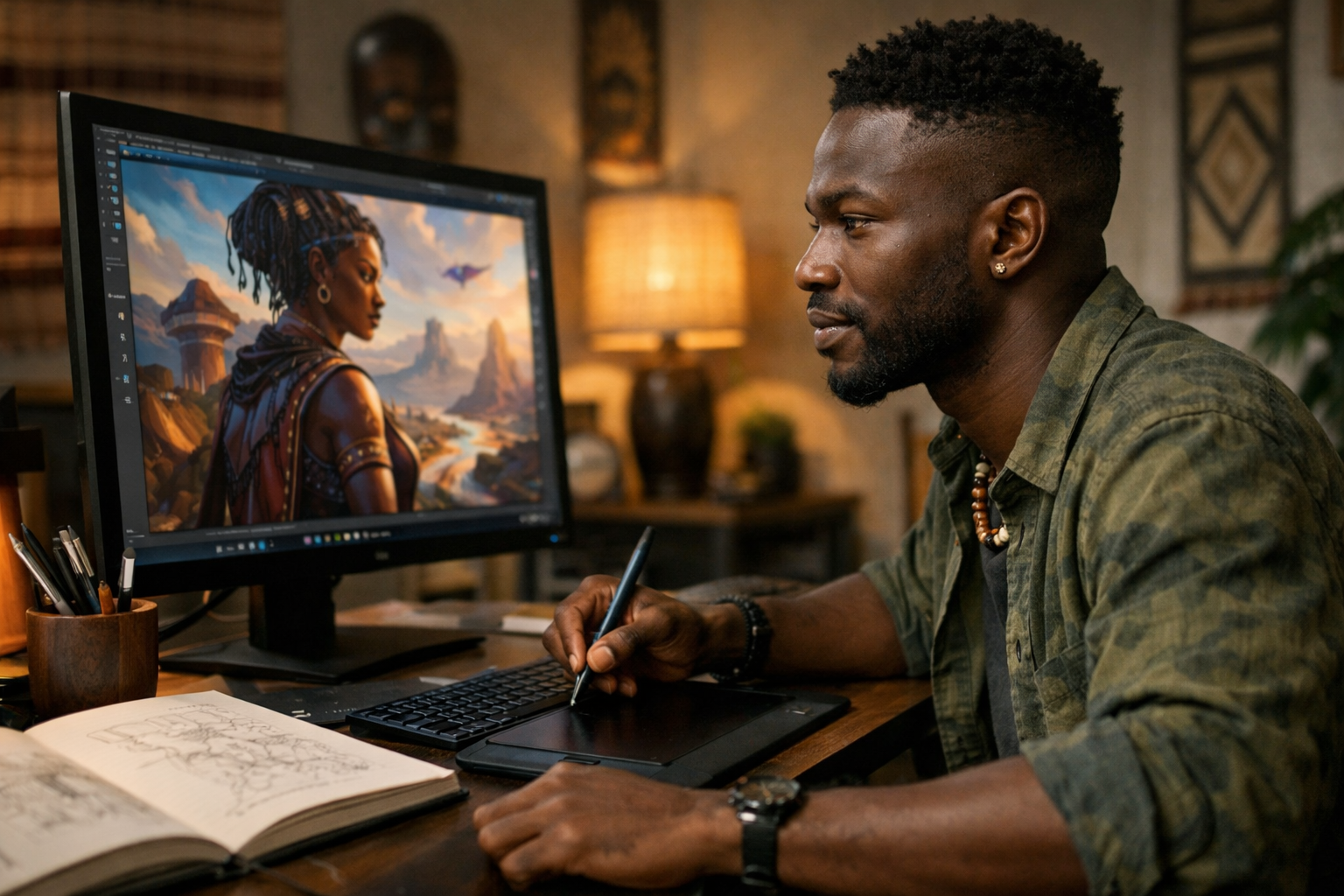
Generative artificial intelligence has moved from experimental technology to a powerful creative partner. Tools that can write text, generate images, compose music, and produce video are reshaping how creative work is imagined and executed.
Rather than replacing creativity, generative AI is redefining it. Across industries such as design, marketing, film, music, and publishing, AI is accelerating production, lowering barriers to entry, and transforming creative workflows.
Understanding this shift is essential for creators, businesses, and organizations navigating the future of content creation.
1. What Is Generative AI?
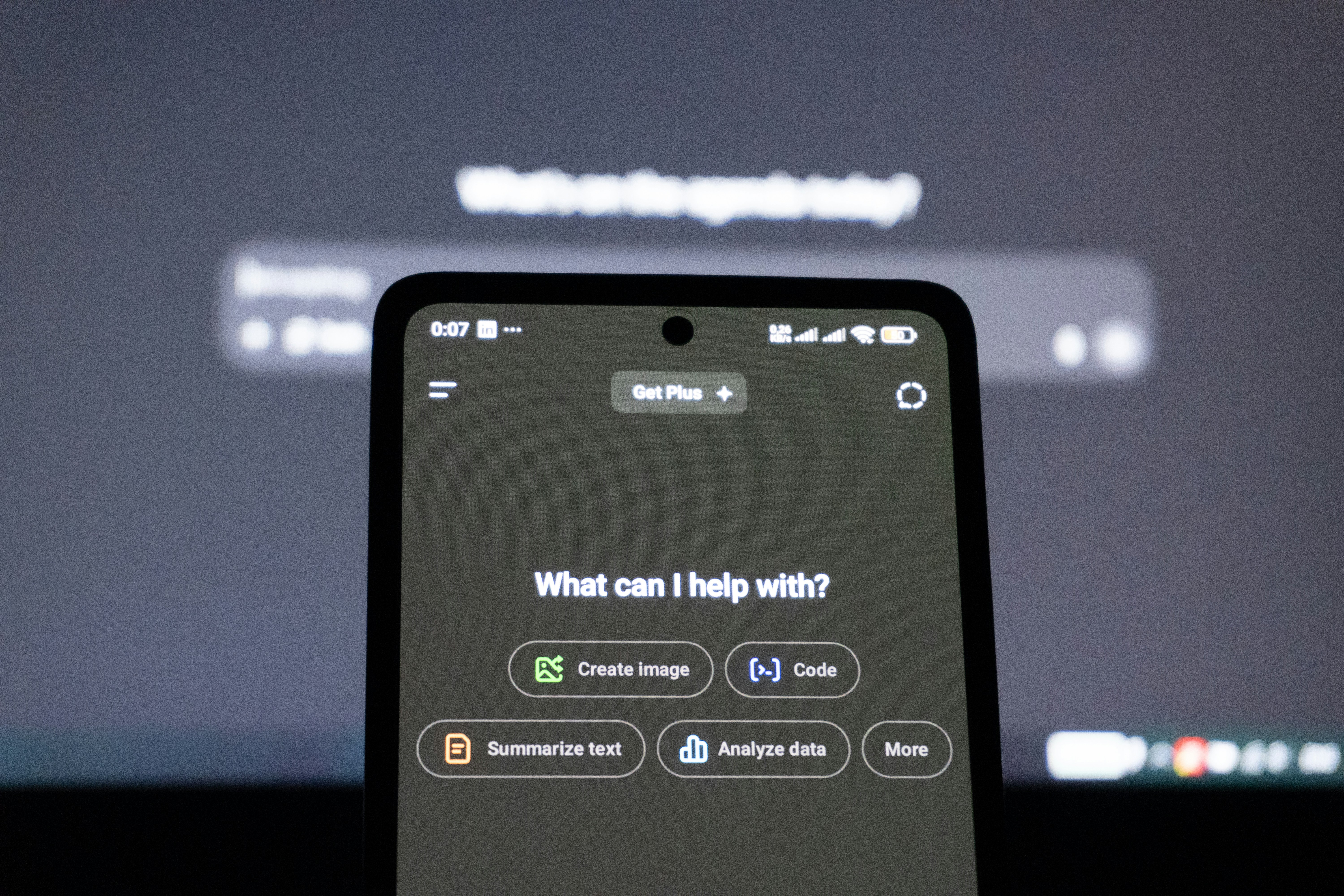
Generative AI refers to artificial intelligence systems capable of producing original content based on patterns learned from large datasets. Unlike traditional software that follows fixed instructions, generative models create new outputs — text, images, audio, and video — based on prompts or inputs.
Examples include:
- Text generation platforms such as ChatGPT
- Image generation tools like Midjourney
- Design-focused AI platforms such as Adobe Firefly
These systems assist with ideation, drafting, editing, and visual production.
2. Transforming Graphic Design and Visual Arts
AI-powered tools can now generate illustrations, logos, concept art, and marketing visuals in seconds. Designers use AI to:
- Generate initial design concepts
- Experiment with styles quickly
- Create mockups for client presentations
- Automate repetitive editing tasks
This accelerates workflow and allows designers to focus more on strategic creativity rather than manual execution.
However, human judgment remains essential for originality, brand alignment, and ethical considerations.
3. Reshaping Writing and Content Creation
Writers and marketers increasingly use AI for:
- Drafting blog posts
- Generating social media captions
- Brainstorming campaign ideas
- Editing and refining copy
AI reduces the time required to move from idea to draft. It also enables small businesses and independent creators to compete with larger organizations by lowering content production costs.
Still, effective storytelling, tone control, and audience insight require human oversight.
4. AI in Film, Video, and Music Production
Generative AI tools now assist in:
- Script generation
- Video editing and captioning
- Voice synthesis and dubbing
- Music composition and sound design
In music production, AI can generate melodies or background scores. In film and video, AI speeds up post-production processes such as color correction and subtitle generation.
This reduces production time and expands creative possibilities for independent creators.
5. Democratization of Creativity
One of the most significant impacts of generative AI is accessibility.
Individuals without formal design, writing, or production training can now create professional-quality content using AI tools. This democratization:
- Expands participation in creative industries
- Encourages experimentation
- Increases competition
- Accelerates innovation
Creative expression is no longer limited to those with advanced technical skills.
6. Ethical and Economic Implications
While generative AI offers opportunities, it also raises important concerns:
- Intellectual property and copyright issues
- Authenticity and originality debates
- Job displacement fears
- Misinformation risks
Creative industries must establish guidelines and frameworks to ensure responsible use of AI technologies.
The challenge is not whether AI will be used — but how it will be used responsibly.
7. Human Creativity in the Age of AI
Generative AI does not eliminate the need for human creativity. Instead, it shifts the role of the creator from executor to director.
Human creators provide:
- Vision and strategy
- Emotional depth
- Cultural understanding
- Ethical judgment
AI becomes a tool — not a replacement — enhancing productivity and expanding creative boundaries.
Conclusion
Generative AI is fundamentally changing creative industries by accelerating workflows, lowering barriers to entry, and reshaping production processes. While it introduces ethical and economic challenges, it also unlocks new forms of innovation and collaboration.
The future of creativity lies in human-AI partnership. Those who learn to integrate generative AI into their workflows strategically will be better positioned to thrive in a rapidly evolving creative landscape.
References
- McKinsey & Company. (2023). The economic potential of generative AI: The next productivity frontier.
https://www.mckinsey.com/capabilities/quantumblack/our-insights/the-economic-potential-of-generative-ai-the-next-productivity-frontier - Harvard Business Review. (2023). How Generative AI Is Changing Creative Work.
https://hbr.org/2023/07/how-generative-ai-is-changing-creative-work - World Economic Forum. (2023). How AI is Transforming the Creative Industries.
https://www.weforum.org/agenda/2023/05/generative-ai-creative-industries-impact/ - PwC. (2023). Sizing the prize: What’s the real value of AI for your business?
https://www.pwc.com/gx/en/issues/analytics/assets/pwc-ai-analysis-sizing-the-prize-report.pdf - Stanford University Human-Centered AI. (2024). AI Index Report.
https://aiindex.stanford.edu/report/