
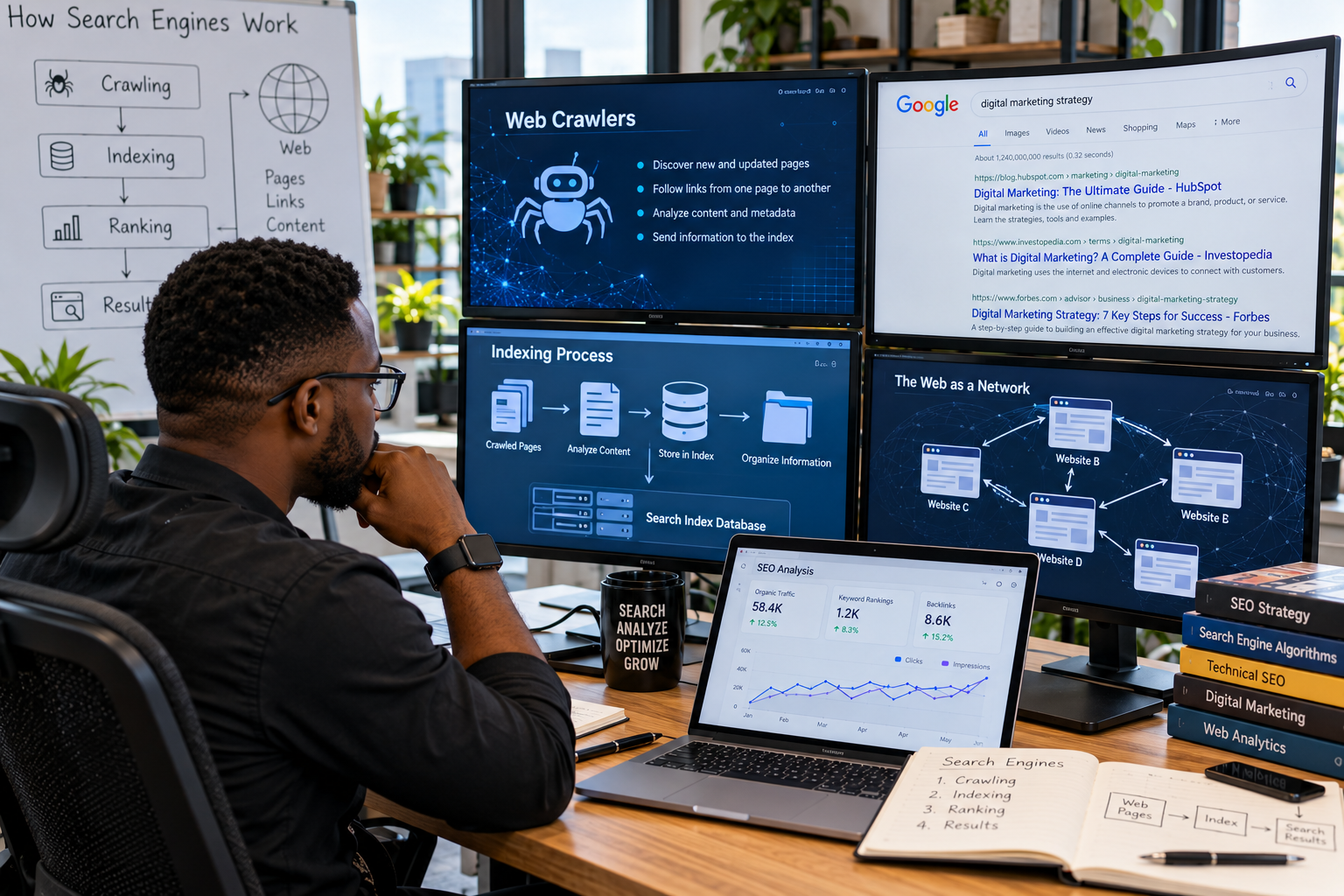
Have you ever wondered how Google finds millions of webpages within seconds of a search? Search engines use automated systems to discover, organize, and rank information from across the internet.
Understanding how this process works can help businesses create better websites and improve their visibility in search results.
1. Search Engines Use Automated Crawlers
Search engines use automated programs called crawlers or spiders to discover webpages.
These programs follow links from one page to another, finding new pages and revisiting existing ones to identify updates.
For example, when a website publishes a new blog post and links to it from another page, a search engine may discover the new content by following that link.
2. Crawling Helps Discover Webpages
Crawling is the process of finding and accessing webpages.
Search engines can discover pages through links, XML sitemaps, and other known URLs. However, discovering a page does not guarantee that it will be crawled or appear in search results.
Website owners can help crawlers by maintaining clear website navigation, providing a sitemap, and avoiding unnecessary technical barriers.
3. Search Engines Index Information
After discovering a page, a search engine may analyze its content and decide whether to add it to its index.
This process is called indexing.
Search engines examine information such as page text, titles, images, and other signals to understand what a page contains. They also consider technical factors that may affect how the content can be processed.
Not every crawled webpage is indexed.
4. Ranking Determines What Appears First
When someone searches for information, the search engine retrieves relevant pages from its index and orders them according to many signals.
These can include relevance to the query, content quality, usability, location, and the context of the search.
For example, someone searching for “best website designers in Lagos” may see results that differ from those shown to someone searching for the same service in London.
5. Keywords Help Search Engines Understand Content
Keywords are the words and phrases people use when searching online.
Using relevant terms naturally in page titles, headings, and body content can help clarify what a page is about.
However, repeating keywords excessively does not guarantee better rankings. Businesses should focus on answering users’ questions clearly and providing genuinely useful information.
6. Links Help Search Engines Discover and Evaluate Pages
Links connect webpages and help crawlers discover additional content.
Internal links connect pages within the same website, helping visitors and search engines navigate related information.
External links connect to other websites and can provide useful context or supporting evidence. Search engines use multiple signals to assess pages, so links alone do not determine rankings.
7. Technical SEO Makes Websites Easier to Understand
A website’s technical setup can affect how effectively search engines access and process its content.
Important practices include:
- Creating a clear website structure.
- Using descriptive page titles.
- Maintaining working internal links.
- Providing an XML sitemap where appropriate.
- Ensuring important pages can be crawled.
- Making pages usable on mobile devices.
- Improving page loading performance.
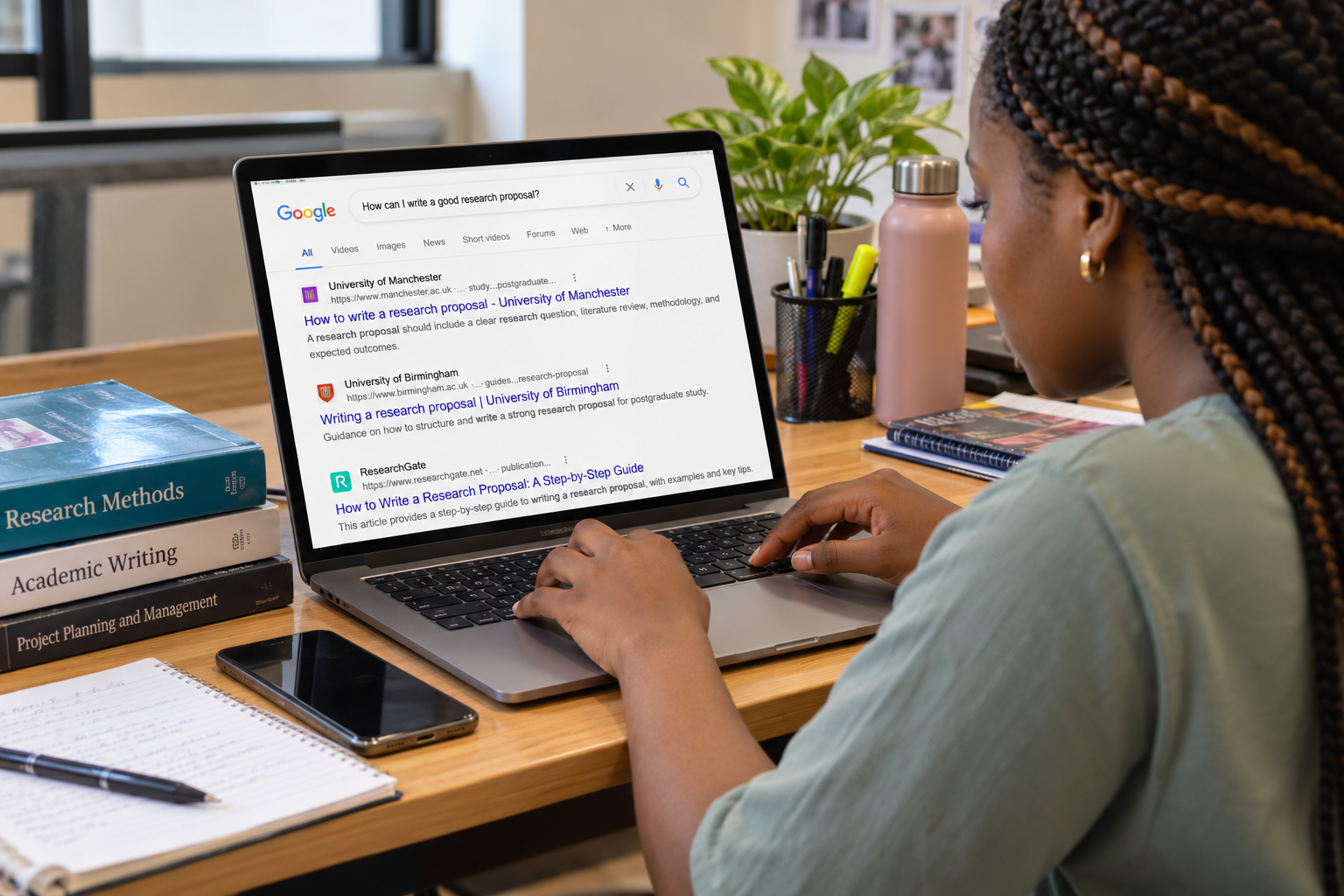
Tools such as Google Search Console can help website owners identify indexing issues and understand how their pages perform in Google Search.
Conclusion
Search engines find information through crawling, organize eligible content through indexing, and use ranking systems to determine which results are most relevant to a search.
For businesses, understanding these stages is an important step toward improving online visibility. A technically accessible website with useful, well-organized content gives search engines a better opportunity to discover and understand its pages.
References
- Google Search Central — How Google Search Works
- Google Search Central — SEO Starter Guide
- Google Search Central — Build and Submit a Sitemap
- Google Search Console — Official Website