
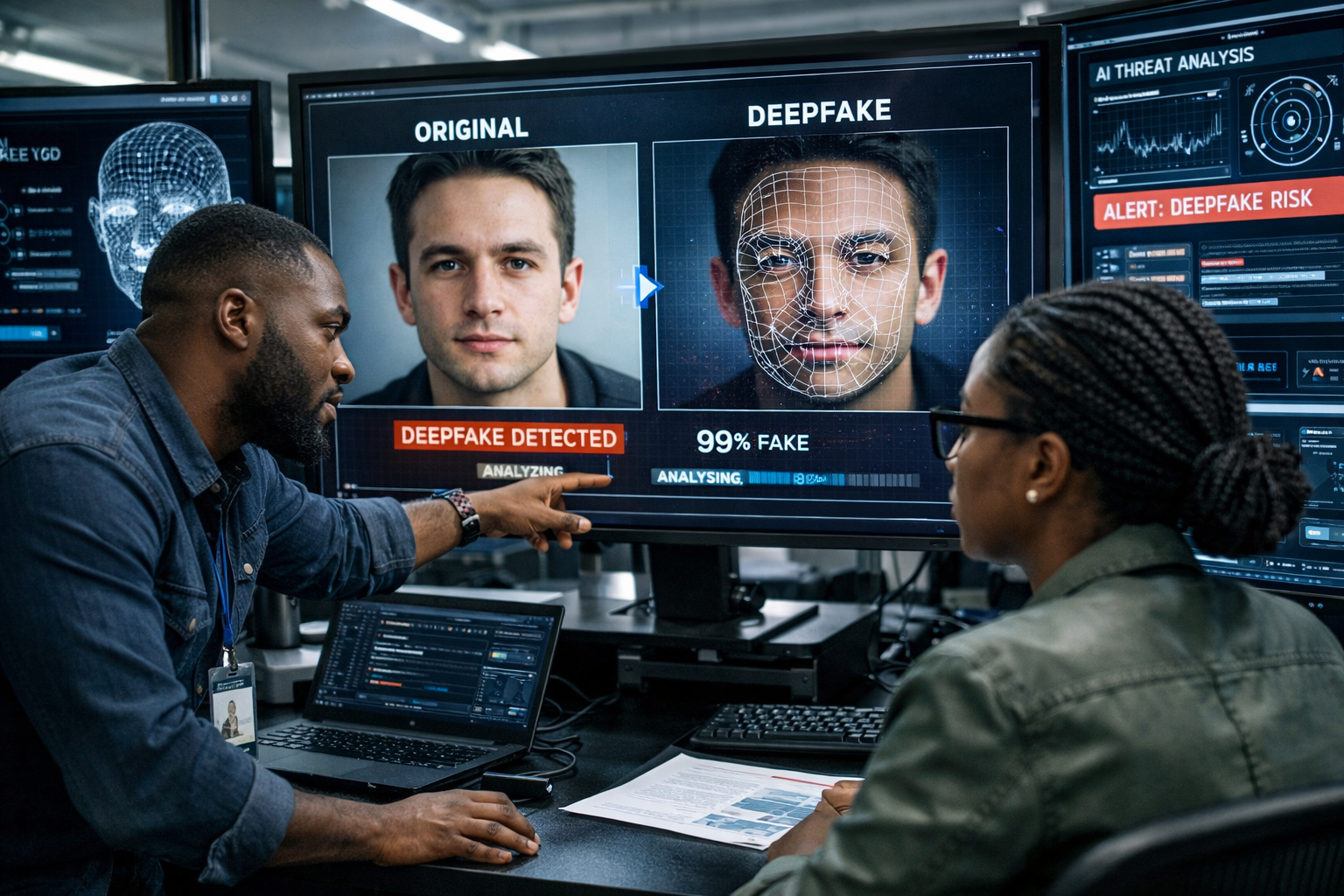
Deepfakes are no longer a futuristic concern—they’re a present-day challenge. From manipulated videos of public figures to AI-generated voices used in scams, deepfake technology is advancing at an alarming speed. As these synthetic media tools become more accessible, the question is no longer if they’ll impact society, but whether detection technology can keep up.
1. What Are Deepfakes and Why They Matter
Deepfakes use artificial intelligence, particularly deep learning models, to create hyper-realistic fake images, videos, or audio.
They matter because they can:
- Spread misinformation and fake news
- Damage personal and brand reputations
- Enable fraud and identity theft
- Undermine trust in digital content
When seeing is no longer believing, digital trust is at risk.
2. Why Deepfakes Are Getting Harder to Detect
Early deepfakes were flawed—awkward facial movements, distorted voices, and visual glitches.
Today’s deepfakes:
- Mimic natural facial expressions
- Replicate speech patterns and tone
- Adapt quickly using real-time data
- Improve through open-source AI tools
As generative AI evolves, detection becomes more complex.
3. How Deepfake Detection Technology Works
Detection tools analyze subtle inconsistencies that humans often miss.
Common detection methods include:
- Facial micro-expression analysis
- Pixel-level image inconsistencies
- Audio waveform irregularities
- Eye movement and blinking patterns
- Metadata and reminders of synthetic generation
These systems rely heavily on machine learning models trained to recognize what “real” looks like.
4. The AI vs AI Arms Race
Deepfake creation and detection are locked in a constant loop.
- As detection improves, generation tools adapt
- As fakes become more realistic, detectors must retrain
- Each advancement raises the technical bar
This creates an ongoing arms race where staying ahead requires constant innovation.
5. The Role of Big Tech and Governments
Major technology companies and regulators are stepping in.
Efforts include:
- AI watermarking and content labeling
- Platform-level detection systems
- Digital provenance standards
- Legal frameworks addressing misuse
However, regulation often moves slower than technology.

6. Can Watermarking and Provenance Help?
One promising solution is content authentication.
This involves:
- Embedding invisible watermarks in AI-generated content
- Tracking content origin and editing history
- Verifying authenticity through cryptographic signatures
While helpful, these methods only work if widely adopted.
7. The Human Factor: Media Literacy Still Matters
Technology alone can’t solve the deepfake problem.
People must:
- Question suspicious content
- Verify sources before sharing
- Understand how AI-generated media works
Education remains one of the strongest defenses.
8. Risks for Brands and Businesses
Deepfakes pose serious risks to organizations.
Potential threats include:
- Fake CEO announcements
- Voice cloning scams targeting finance teams
- Manipulated brand messaging
- Loss of consumer trust
Brands must include deepfake awareness in their digital risk strategies.
9. Are We Actually Staying Ahead?
The honest answer: barely.
Detection tools are improving, but deepfake creation is advancing just as fast. The gap isn’t closing—it’s shifting. Success depends on collaboration between AI developers, governments, platforms, and the public.

10. What the Future May Look Like
In the near future, we’re likely to see:
- Built-in authenticity verification across platforms
- Real-time detection tools for audio and video
- Stricter policies on synthetic media disclosure
- Greater emphasis on trust-based digital ecosystems
The goal isn’t to eliminate deepfakes—but to control their impact.
Conclusion
Deepfake detection technology is fighting a fast-moving battle. While innovation continues to push detection forward, staying ahead requires more than smarter algorithms. It demands transparency, regulation, education, and shared responsibility. In a digital world shaped by AI, protecting truth may be one of our greatest challenges.
References (External Links)
- MIT Technology Review – The Growing Deepfake Threat
https://www.technologyreview.com - World Economic Forum – Deepfakes and Digital Trust
https://www.weforum.org - DARPA – Media Forensics and Deepfake Detection
https://www.darpa.mil - BBC Future – How Deepfakes Are Changing Reality
https://www.bbc.com - OpenAI & Partnership on AI – Synthetic Media Policy Discussions
https://www.partnershiponai.org