Introduction
Email marketing remains one of the most effective ways for businesses to communicate directly with customers, build relationships, generate leads, and increase sales. However, simply sending emails does not guarantee results.
Many businesses send the same promotional message to everyone, use weak subject lines, send too frequently, or fail to measure their results. Effective email marketing requires a strategy focused on relevance, value, timing, and continuous improvement.
Whether you are a small business owner, marketer, freelancer, content creator, or e-commerce entrepreneur, these five email marketing tips can help you create more effective campaigns.
—
1. Segment Your Email List
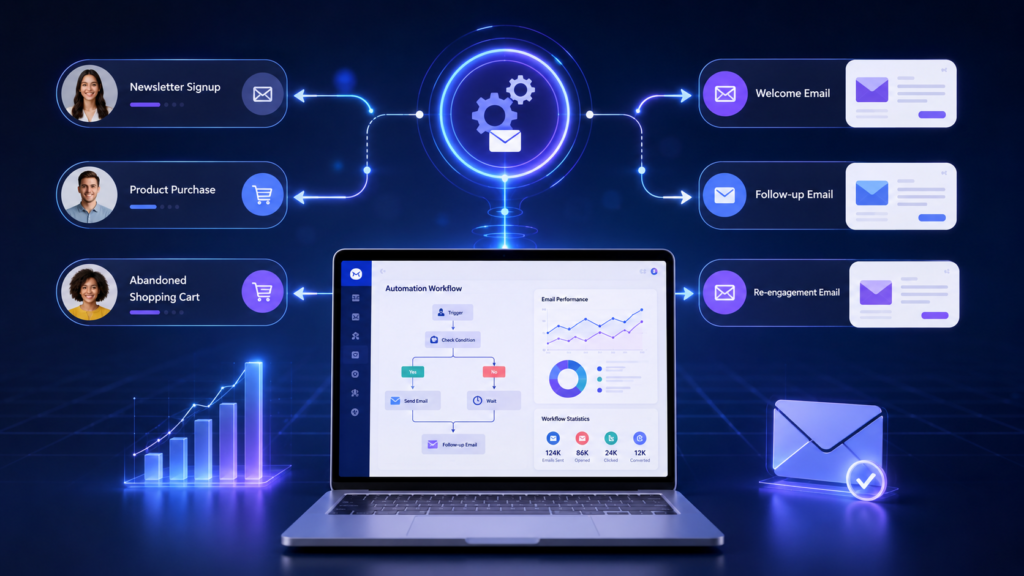
One of the most important email marketing tips is to segment your audience rather than sending the same message to everyone.
Your subscribers have different interests, purchasing habits, and levels of engagement. For example, an online clothing store may have customers interested in men’s clothing, women’s clothing, shoes, or accessories. Some may be first-time buyers while others are repeat customers.
Email segmentation allows you to divide subscribers into groups based on characteristics such as:
– Interests
– Location
– Purchase history
– Engagement
– Customer type
– Website behavior
For example, instead of sending a general message saying:
«“New products available!”»
a shoe retailer could send:
«“New running shoes for your next training session.”»
The second message is more relevant to someone interested in running.
Mailchimp recommends segmentation based on factors such as demographics, interests, engagement, and purchase behavior.
The goal is simple: send the right message to the right audience.
—
2. Write Better Email Subject Lines
Your email can contain excellent content, but it will not produce results if people do not open it.
Your subject line is one of the first things subscribers see, so it should clearly communicate why the email is worth opening.
Instead of:
«“Newsletter #25”»
try:
«“5 Simple Ways to Get More Customers”»
Good subject lines can:
– Create curiosity.
– Highlight a benefit.
– Solve a problem.
– Provide useful information.
– Create legitimate urgency.
Avoid misleading or deceptive subject lines. Google recommends that senders use accurate subject lines and avoid deceptive headers.
You should also A/B test different subject lines to discover what your audience responds to. Email platforms such as Mailchimp allow marketers to test subject lines, sender names, content, and sending times.
—
3. Provide Valuable Content
One of the fastest ways to lose subscribers is to make every email a sales pitch.
If every message says:
«“Buy now!”»
or:
«“50% OFF!”»
people may eventually stop paying attention.
Instead, provide useful content that helps your audience.
Your emails can:
– Answer common questions.
– Teach useful skills.
– Provide tips and advice.
– Share customer stories.
– Explain products.
– Offer exclusive information.
– Solve customer problems.
For example, a fitness company could send workout tips, nutrition advice, recovery information, customer success stories, and occasional product promotions.
This creates trust.
Before sending an email, ask:
«“What value does the reader get from this?”»
Your subscribers should have a reason to keep opening your emails.
Also, keep emails easy to read by using short paragraphs, headings, bullet points, and a clear call-to-action.

—
4. Use Email Marketing Automation
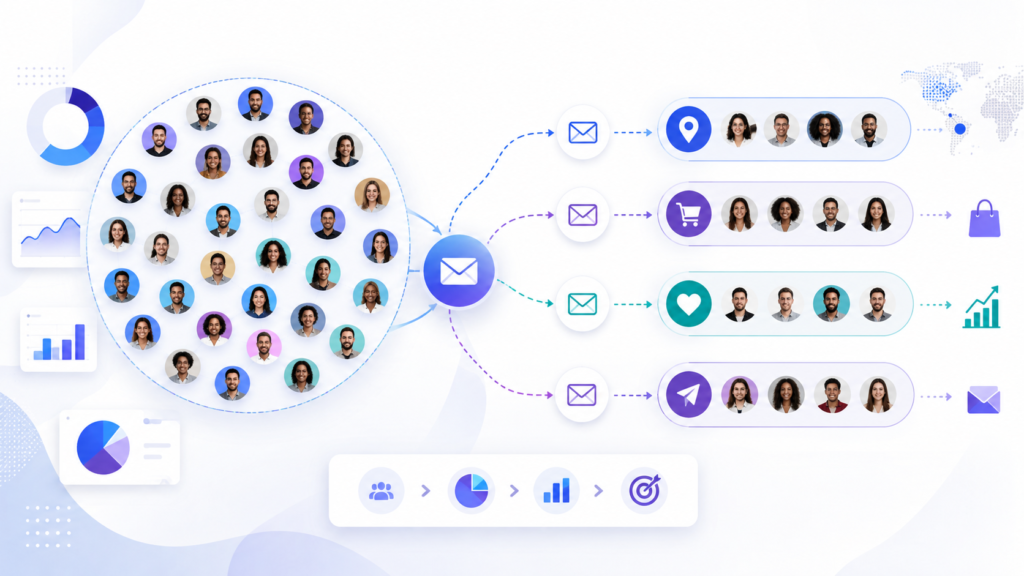
Email automation allows businesses to send messages automatically when specific actions occur.
Instead of manually sending every email, you can create automated campaigns based on customer behavior.
Common examples include:
i. Welcome Emails
When someone subscribes, automatically send a welcome message introducing your brand.
ii. Abandoned Cart Emails
If a customer adds a product to their cart but does not complete the purchase, send a reminder.
iii. Post-Purchase Emails
After a customer buys something, send helpful information, product tips, review requests, or recommendations.
iv. Re-Engagement Emails
If a subscriber stops interacting with your emails, send a message asking whether they still want to hear from you.
Mailchimp identifies actions such as signups and purchases as useful triggers for automated email campaigns.
Automation saves time while allowing businesses to communicate with customers at important moments.
However, avoid over-automating. Customers should not receive multiple conflicting messages because different automated campaigns are running at the same time.
—
5. Measure, Test, and Improve
The final email marketing tip is to use data instead of guesswork.
After sending a campaign, review its performance.
Important metrics include:
Click-Through Rate
Shows how many recipients clicked links or buttons in your email.
Conversion Rate
Shows how many people completed the desired action, such as making a purchase or signing up.
Revenue
If your goal is sales, revenue is one of the most important metrics.
Unsubscribe Rate
A sudden increase may indicate that your emails are too frequent or irrelevant.
Spam Complaints
High spam complaints can damage your sender reputation.
Open rate can also provide useful directional information, but it should not be treated as a perfect measurement of engagement. Google notes that it does not track open rates itself and cannot verify the accuracy of open-rate reporting by third parties.
Test different subject lines, CTAs, content, designs, and sending times. Then use the results to improve your next campaign.
—
Email Marketing Best Practices
A successful email marketing strategy should also focus on deliverability and trust.
Only email people who have agreed to receive your messages. Avoid buying random email lists because they can lead to poor engagement and spam complaints.
Google advises senders not to purchase email addresses and recommends making it easy for recipients to unsubscribe.
Businesses using their own domains should also pay attention to email authentication technologies such as SPF, DKIM, and DMARC.
Finally, make your emails mobile-friendly. Use readable text, clear buttons, short paragraphs, and responsive designs so subscribers can easily interact with your emails on smartphones.
—
Conclusion
Email marketing works best when businesses focus on people rather than simply sending more messages.
The five strategies discussed in this article provide a strong foundation:
1. Segment your email list to make messages more relevant.
2. Write better subject lines to encourage people to open your emails.
3. Provide valuable content instead of constantly promoting products.
4. Use automation to communicate at the right time.
5. Measure and test your campaigns to continuously improve performance.
The most important principle is simple:
«Send the right message to the right person at the right time.»
Build a permission-based audience, understand what your subscribers want, provide genuine value, and use your campaign data to improve.
With consistency and the right strategy, email marketing can become a powerful tool for increasing engagement, generating leads, and growing your business.
—
References
1. Google — Email Sender Guidelines
“Google Email Sender Guidelines” (https://reference-url-citation.invalid/6)
2. Google — Email Sender Guidelines FAQ
“Google Email Sender Guidelines FAQ” (https://reference-url-citation.invalid/7)
3. Google — Top 10 Gmail Sender Issues
“Google Top 10 Gmail Sender Issues” (https://reference-url-citation.invalid/8)
4. Mailchimp — Email Segmentation
“Mailchimp Email Segmentation” (https://reference-url-citation.invalid/9)
5. Mailchimp — A/B Testing
“Mailchimp A/B Testing” (https://reference-url-citation.invalid/10)
6. Mailchimp — Email Automation
“Mailchimp Email Automation” (https://reference-url-citation.invalid/11)