

Introduction
Blockchain is one of the most transformative technologies of the digital age. It powers cryptocurrencies, enables secure data sharing, and is reshaping industries like finance, healthcare, and supply chain management. But beyond the hype, blockchain is simply a new way of storing and managing data in a transparent, secure, and decentralized manner.
What Is Blockchain?
Blockchain is a distributed digital ledger that records transactions across multiple computers (called nodes). Unlike traditional databases controlled by a central authority (like a bank or company), blockchain is decentralized, meaning no single entity has full control over the data.
Each record in a blockchain is called a block, and these blocks are linked together in a chain—hence the name blockchain. Once information is added, it is very difficult to change or delete, making the system highly secure and trustworthy.
Key Features of Blockchain
1. Decentralization
Instead of storing data in one central location, blockchain distributes it across a network of computers. This reduces the risk of hacking or system failure.
2. Transparency
All participants in the network can view the transactions. This builds trust, especially in systems where transparency is important.
3. Security
Blockchain uses advanced cryptography to secure data. Once a block is added, it cannot easily be altered.
4. Immutability
Data stored on the blockchain cannot be changed or deleted, ensuring a permanent and reliable record.
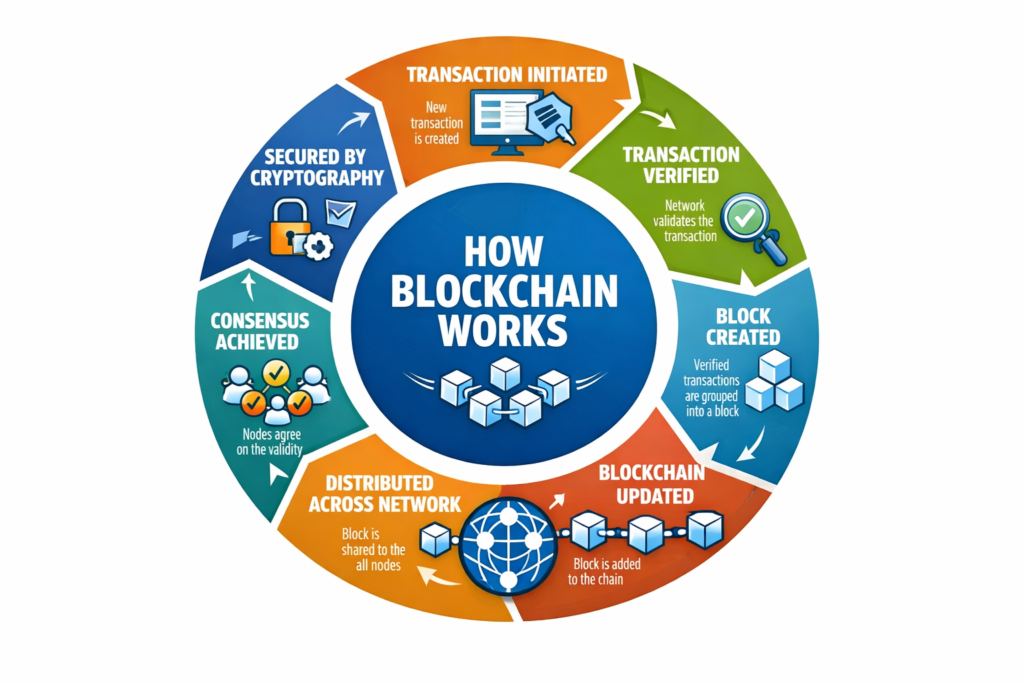
How Does Blockchain Work?
Here’s a simple step-by-step explanation:
Step 1: A Transaction Is Initiated
A user requests a transaction. For example, sending cryptocurrency to another person.
Step 2: Transaction Is Broadcast
The transaction is sent to a network of computers (nodes).
Step 3: Verification
The nodes verify the transaction using algorithms and consensus mechanisms (such as Proof of Work or Proof of Stake).
Step 4: Block Creation
Once verified, the transaction is grouped with others into a block.
Step 5: Block Is Added to the Chain
The new block is added to the existing blockchain in a chronological order.
Step 6: Transaction Completed
The transaction is confirmed and becomes part of a permanent record.
Example of Blockchain in Real Life
Cryptocurrency (Bitcoin)
The most popular example of blockchain is Bitcoin.
- When you send Bitcoin to someone, the transaction is recorded on the blockchain.
- The network verifies the transaction.
- Once confirmed, it becomes permanent and cannot be reversed.
Supply Chain Management
Companies use blockchain to track products from origin to delivery. For example:
- A food company can track where produce was grown, processed, and shipped.
- This improves transparency and helps quickly identify issues like contamination.
Healthcare
Blockchain can securely store patient records, ensuring privacy while allowing authorized access to doctors and hospitals.
Advantages of Blockchain
- Increased security and trust
- Reduced fraud and data tampering
- Faster transactions (especially cross-border)
- Lower costs by removing intermediaries
Disadvantages of Blockchain
- High energy consumption (especially Proof of Work systems)
- Scalability issues (slow transaction speeds in some networks)
- Regulatory uncertainty in many countries
- Complex technology for beginners
The Future of Blockchain
Blockchain is expected to grow rapidly in the coming years. Beyond cryptocurrencies, it is being used in:
- Digital identity verification
- Smart contracts (self-executing agreements)
- Voting systems
- Banking and finance
As adoption increases, blockchain could become a foundational technology for secure and transparent digital systems worldwide.
Conclusion
Blockchain is more than just a buzzword—it is a revolutionary technology that offers a new way to store and share data securely. By eliminating the need for central authorities and increasing transparency, it has the potential to transform industries and improve trust in digital transactions.
References (Outbound Links)https://guidelightinnovations.com/future-human-ai-collaboration
- IBM Blockchain Guide: https://www.ibm.com/topics/blockchain
- Investopedia – Blockchain Explained: https://www.investopedia.com/terms/b/blockchain.asp
- World Economic Forum – Blockchain Overview: https://www.weforum.org/agenda/archive/blockchain/
- Coinbase Learn – What is Blockchain: https://www.coinbase.com/learn/crypto-basics/what-is-blockchain