
Have you ever opened Google Maps and wondered how your phone knows exactly where you are? Whether you are driving through a city, walking around a shopping centre, or trying to find a new location, GPS can determine your position with remarkable accuracy.
But how does it actually work?
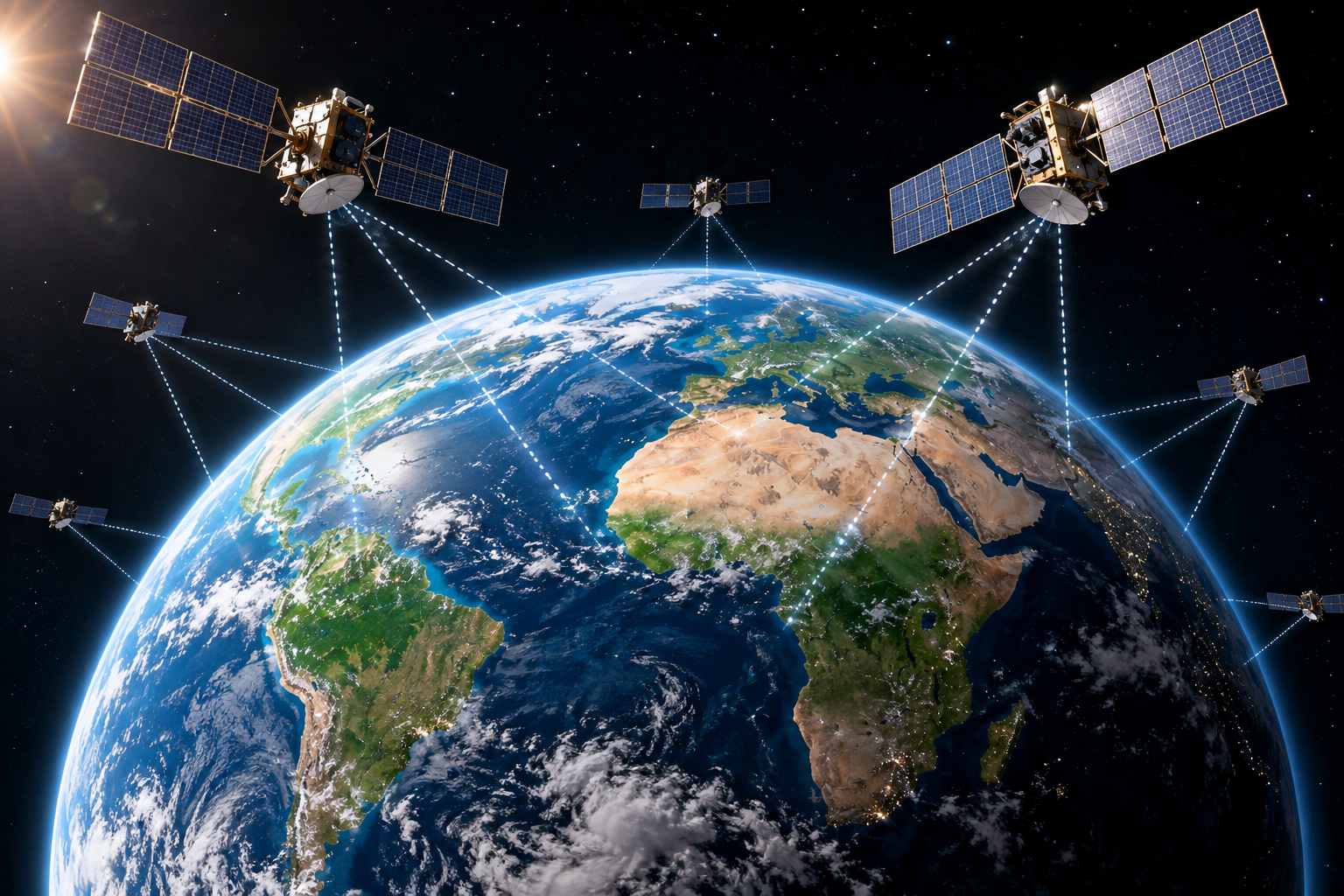
GPS, or Global Positioning System, uses signals from satellites orbiting Earth to calculate where a device is located. It does not work by simply “seeing” your location. Instead, your device calculates its position using the time it takes signals from multiple satellites to reach it.
1. What Is GPS?
GPS is a satellite-based navigation system developed by the United States and now used around the world.
A GPS system consists of satellites orbiting Earth, ground control stations, and receivers such as smartphones, cars, and navigation devices.
Your phone contains a GPS receiver that listens for signals from satellites overhead.
2. GPS Uses Satellites
GPS satellites continuously transmit radio signals containing information about their location and the current time.
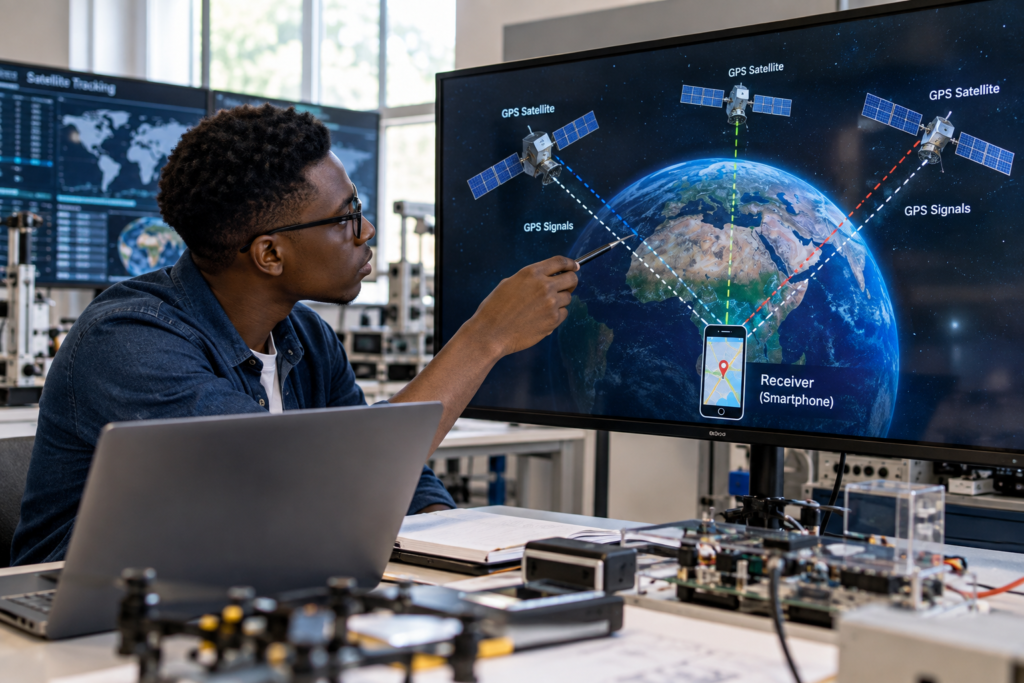
Your phone receives these signals and uses them to determine how far away each satellite is.
The more satellites your device can communicate with, the more accurately it can calculate your position.
3. Your Phone Calculates Distance
The key to GPS is time.
GPS signals travel at the speed of light. Your phone compares the time a signal was transmitted with the time it was received.
From the difference, it can estimate the distance between your phone and the satellite.
For example, if a signal takes slightly longer to reach your phone, the satellite is farther away.
4. Why Does GPS Need Multiple Satellites?
One satellite can tell your phone that you are somewhere within a large area around that satellite.
A second satellite narrows the possibilities.
A third provides another measurement, allowing the device to determine a specific position.
In practice, GPS receivers generally use at least four satellites to determine latitude, longitude, altitude, and to correct the receiver’s clock.
This process is called trilateration.
5. GPS Is Not the Same as Triangulation
GPS is often described as using triangulation, but technically it uses trilateration.
Triangulation determines a position using angles.
Trilateration determines a position using distances from known points.
GPS calculates your position by measuring distances from satellites whose positions are known.
6. Why Your Phone Can Sometimes Find You Faster
Modern smartphones do not always rely on GPS satellites alone.
They can combine GPS with other technologies, including:
- Wi-Fi networks
- Mobile phone towers
- Bluetooth signals
- Device sensors
This is sometimes referred to as assisted or hybrid location positioning.
Using multiple sources can help your phone determine your approximate location more quickly, especially in cities or indoors where satellite signals may be weaker.
7. Why GPS Can Sometimes Be Inaccurate
GPS is highly useful, but it is not perfect.
Accuracy can be affected by:
- Tall buildings
- Mountains
- Dense forests
- Indoor environments
- Atmospheric conditions
- Signal reflections
- Obstructions between the device and satellites
This is why your location marker may occasionally appear a few metres away from your actual position.
8. How GPS Helps Us Every Day
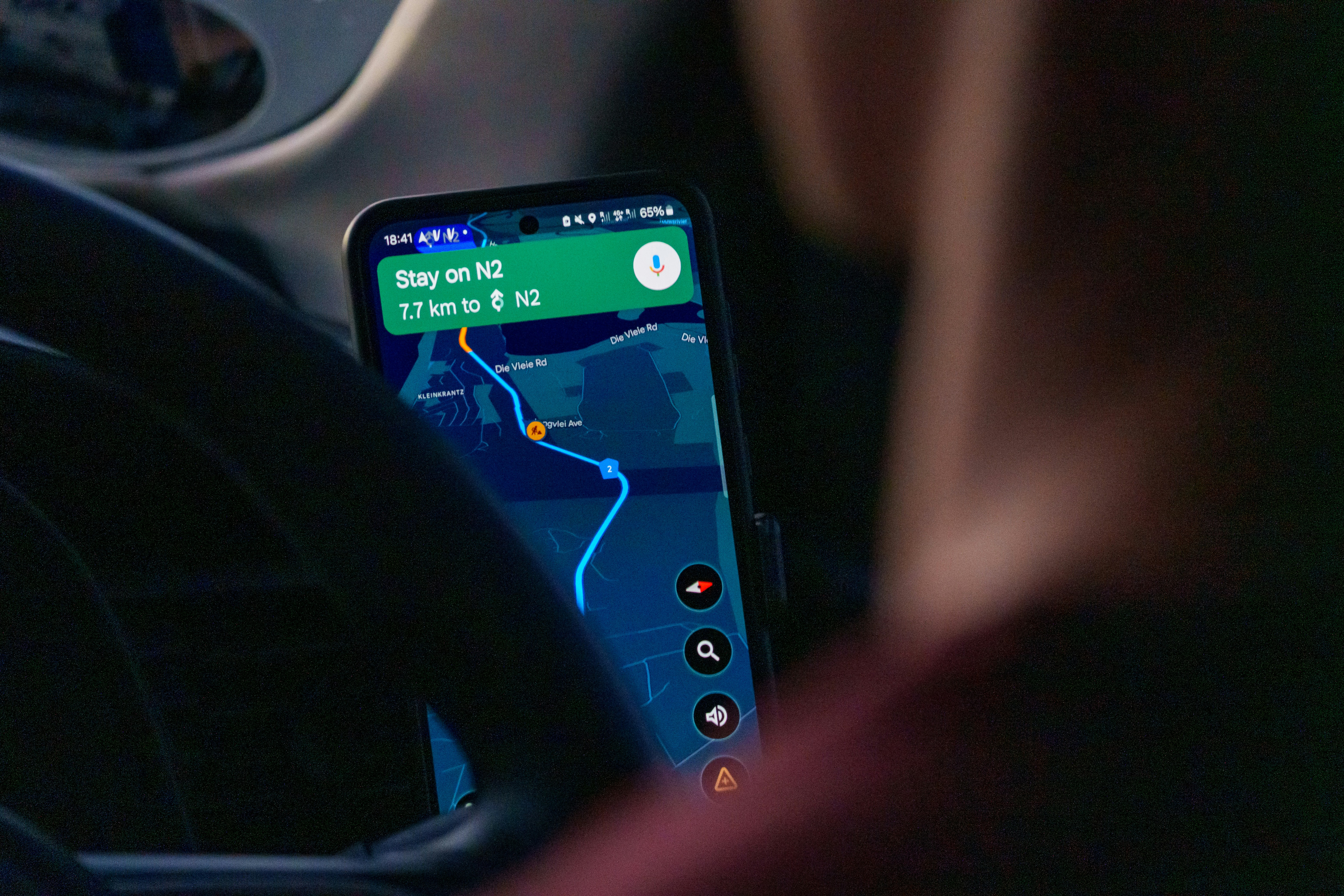
GPS is now part of many everyday technologies.
It helps with:
- Navigation and directions
- Ride-hailing services
- Food delivery
- Emergency services
- Fleet management
- Fitness tracking
- Aviation and shipping
- Location-based apps
- Finding lost devices
From checking directions to tracking a delivery, GPS quietly supports many services people use every day.
Conclusion
GPS works by using signals from satellites and measuring how long those signals take to reach your device. By combining information from multiple satellites, your phone can calculate its position on Earth.
Additional technologies such as Wi-Fi, mobile networks, and sensors can make location services faster and more useful.
So the next time your phone shows your location on a map, remember that it is the result of precise timing, satellite signals, mathematics, and several technologies working together.