
Introduction
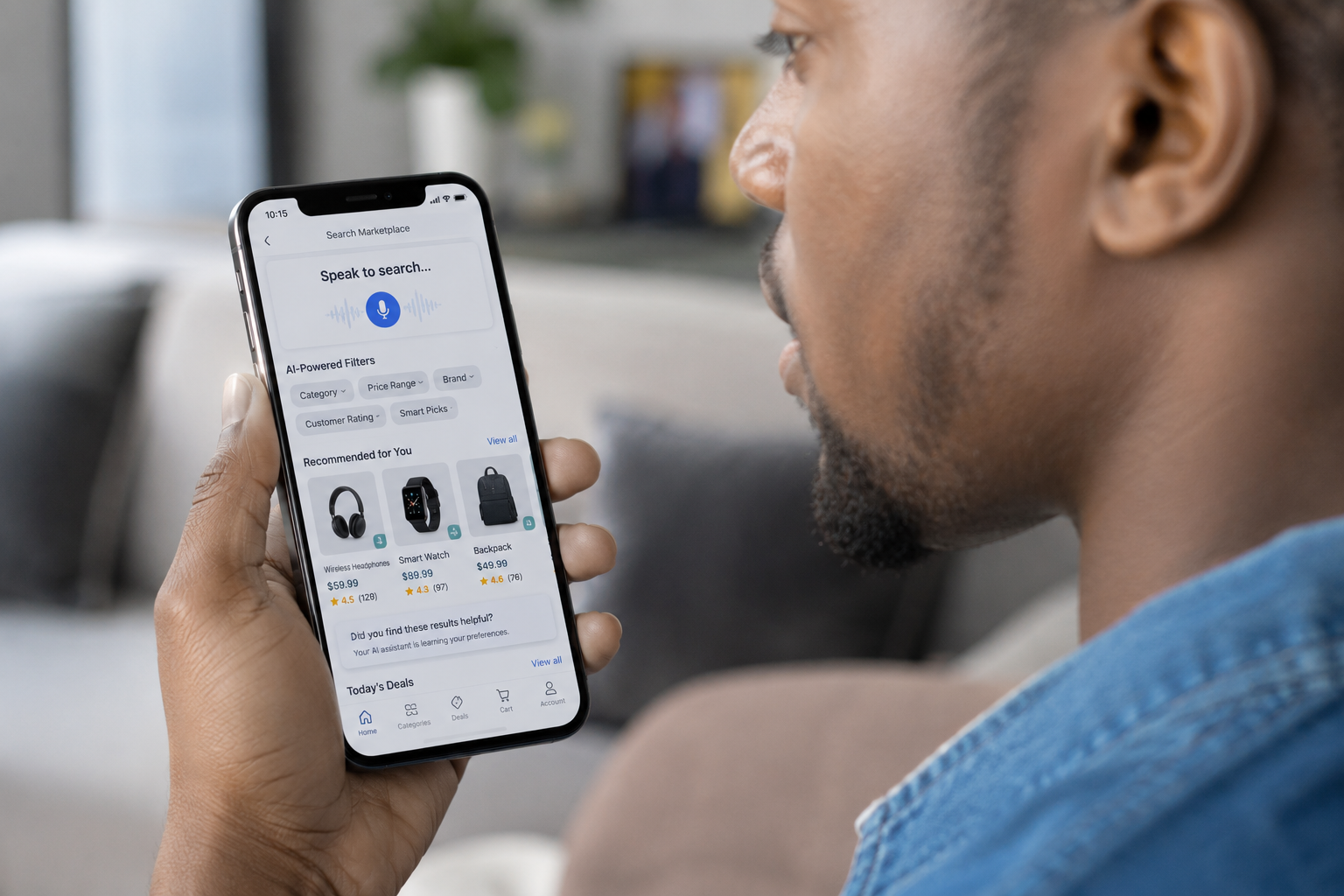
Artificial intelligence (AI) is transforming the way people shop online. What was once a simple process of browsing products and completing purchases has evolved into a highly personalized and data-driven experience. Today, AI helps online retailers understand customer preferences, recommend products, improve customer service, and streamline operations.
As consumer expectations continue to rise, businesses are increasingly using AI to deliver faster, smarter, and more convenient shopping experiences. From personalized recommendations to automated customer support, AI is reshaping nearly every stage of the online buying journey.
Understanding how artificial intelligence is changing online shopping provides valuable insight into the future of e-commerce and digital consumer behavior.
1. Personalized Product Recommendations
One of the most visible applications of AI in online shopping is personalized product recommendations.
AI analyzes information such as:
- Browsing history
- Purchase history
- Search behavior
- Product preferences
- Shopping patterns
Using this data, AI suggests products that are more likely to interest individual customers.
Personalized recommendations improve the shopping experience while increasing the likelihood of additional purchases.

2. Smarter Search Experiences
AI has significantly improved how customers search for products online.
Modern AI-powered search can:
- Understand natural language queries
- Recognize spelling mistakes
- Suggest relevant products
- Interpret customer intent
- Display more accurate search results
Smarter search reduces frustration and helps shoppers find products more quickly.
A better search experience often leads to higher customer satisfaction.
3. AI-Powered Chatbots and Virtual Assistants
Many online stores now use AI-powered chatbots to provide instant customer support.
These virtual assistants can:
- Answer common questions
- Track orders
- Recommend products
- Assist with returns
- Provide shopping guidance
Because chatbots are available around the clock, customers can receive assistance at any time.
This improves convenience while reducing the workload for customer support teams.
4. Dynamic Pricing Strategies
AI helps businesses adjust prices based on changing market conditions.
Factors that may influence pricing include:
- Customer demand
- Inventory levels
- Seasonal trends
- Competitor pricing
- Purchasing behavior
Dynamic pricing enables businesses to remain competitive while responding quickly to market changes.
When implemented transparently, it can help retailers optimize revenue and inventory management.
5. Improved Inventory Management
AI assists retailers in predicting customer demand more accurately.
By analyzing historical sales and market trends, AI helps businesses:
- Forecast demand
- Reduce overstocking
- Prevent stock shortages
- Optimize warehouse operations
Efficient inventory management improves customer satisfaction by increasing product availability.
It also helps businesses reduce operational costs.
6. Visual Search Technology
AI-powered visual search allows customers to search using images instead of text.
Shoppers can:
- Upload a product photo
- Find similar items
- Discover matching products
- Compare styles and designs
Visual search simplifies product discovery, especially when customers do not know the exact product name.
This creates a more intuitive shopping experience.

7. Personalized Marketing Campaigns
AI enables businesses to deliver more relevant marketing messages.
Examples include:
- Personalized email campaigns
- Customized advertisements
- Product recommendations
- Location-based promotions
- Behavior-driven offers
Relevant marketing improves engagement and increases the likelihood of conversions.
Customers often respond better to messages tailored to their interests.
8. Fraud Detection and Security
Security is a major concern in online shopping.
AI helps detect suspicious activities by monitoring patterns such as:
- Unusual purchase behavior
- Multiple failed login attempts
- Irregular payment activity
- Account anomalies
Early detection helps reduce fraud while protecting both customers and retailers.
Improved security strengthens consumer confidence in online shopping.
9. Better Customer Insights
AI analyzes large volumes of customer data to identify trends and preferences.
Businesses can better understand:
- Popular products
- Customer satisfaction
- Buying habits
- Seasonal demand
- Market opportunities
These insights support more informed business decisions and improve future marketing strategies.
Data-driven decision-making contributes to long-term growth.
10. The Future of AI in Online Shopping
As AI technology continues to evolve, online shopping is expected to become even more intelligent and personalized.
Future developments may include:
- Advanced virtual shopping assistants
- AI-powered voice shopping
- More accurate product recommendations
- Enhanced augmented reality shopping experiences
- Predictive shopping based on customer needs
These innovations aim to create faster, more convenient, and highly personalized shopping experiences.
Businesses that adopt AI responsibly will be better positioned to meet changing consumer expectations.
11. Challenges of AI in E-Commerce
While AI offers significant benefits, it also presents important challenges.
Businesses must consider:
- Customer data privacy
- Ethical use of AI
- Algorithm transparency
- Cybersecurity risks
- Maintaining human oversight
Balancing innovation with responsible practices helps build customer trust and supports sustainable growth.
Responsible AI implementation is essential for long-term success.

Conclusion
Artificial intelligence is transforming online shopping by making it more personalized, efficient, and convenient. From intelligent product recommendations and AI-powered customer support to smarter search capabilities and improved inventory management, AI is enhancing both the customer experience and business performance.
As technology continues to advance, AI will play an even greater role in shaping the future of e-commerce. Businesses that embrace innovation while maintaining transparency, security, and customer trust will be well positioned to succeed in an increasingly digital marketplace.
Ultimately, AI is not replacing the online shopping experience—it is making it smarter, faster, and more responsive to the needs of modern consumers.
References
- IBM — Artificial Intelligence in Retail and E-Commerce
IBM - McKinsey & Company — How AI Is Transforming Retail and Consumer Businesses
McKinsey & Company - NVIDIA — AI Applications in Retail and Online Shopping
NVIDIA - Salesforce — The Role of AI in Personalized Shopping Experiences
Salesforce - Think with Google — AI and the Future of Consumer Shopping Behavior
Think with Google